
Last updated October 16, 2026
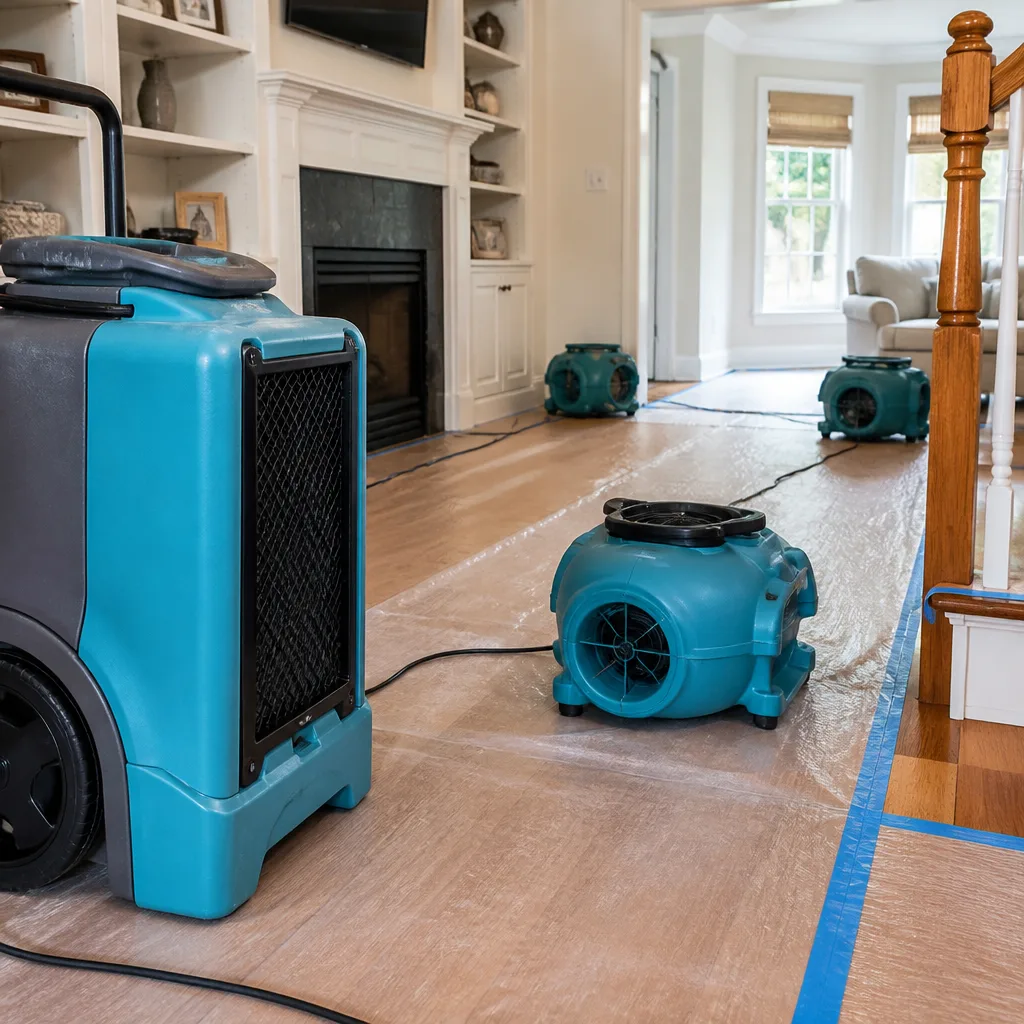 Water damage drying
 Fire & smoke cleanup
 Mold remediation
 Storm response
 Sewage cleanup
 Reconstruction
Free visual inspection and a written scope of work before any mitigation begins - photos, moisture readings, and drying logs go in your claim file
The scope we write is the scope we bill. Anything new gets shown to you, in writing, before we touch it.
Get your free estimateHow to Hire a Damage Restoration Contractor in Thousand Oaks: A Step-by-Step Guide
In the 72 hours after a major rain or fire event in Ventura County, unlicensed contractors have been documented canvassing Thousand Oaks neighborhoods, and the contracts they carry are written to benefit the company, not the homeowner. We’ve watched this pattern repeat for two decades: a storm hits, trucks appear from outside the county, and homeowners sign paperwork that gives a stranger the right to open walls, file claims, and decide what gets saved versus torn out. This guide-along with our complete guide to damage restoration in Thousand Oaks-walks you through a repeatable screening process that filters out price-movers and storm chasers before they set foot in your home. You’ll learn the four credential checks that matter, the contract language that signals trouble, what to ask about technician consistency, and how to make sure your insurance documentation survives an adjuster’s review.
Quick Answer
To hire a damage restoration contractor in Thousand Oaks, verify their California CSLB license and insurance certificate, confirm IICRC certification, ask whether background-checked employees will do the work, demand a written scope of loss and price before anything starts, and insist on a contractor who documents every step for your insurance claim. Skip any company that refuses to put pricing in writing or asks you to sign an assignment of benefits on the spot. A disciplined restoration contractor in Thousand Oaks will welcome these checks, because every one of them is standard practice at a company that runs to a written standard. For more guides & resources, see our blog.
Restoration work we handle
Table of Contents
- The Four License and Credential Checks Every Thousand Oaks Homeowner Should Run
- Contract Language That Signals a Bait-and-Switch Operation
- How to Get a Written Scope and Price Before Work Starts
- Questions to Ask About Technician Consistency
- How to Read a Contractor’s Insurance Documentation Workflow
- What Thousand Oaks Homeowners Need to Know About Local Conditions
- Common Mistakes to Avoid
- When to Call a Professional
The Four License and Credential Checks Every Thousand Oaks Homeowner Should Run
Before you let anyone touch a wall, a floor, or a ceiling in your Thousand Oaks home, run these four checks. They take about 20 minutes total, and they eliminate 90 percent of the contractors who cause disputes in this industry. We’ve walked hundreds of Ventura County homeowners through this exact process, and the ones who skip it are the same ones who call us later with a half-finished job and a contractor who stopped answering the phone.
- CSLB license lookup. Go to the California Contractors State License Board website and search the contractor’s name or license number. Confirm the license is active, not suspended or expired, and check the classification. Water, fire, and mold restoration work in Thousand Oaks requires a general building contractor license (Class B) or an appropriate specialty classification. If the number on their truck doesn’t match the name on the contract, walk away.
- Insurance certificate verification. Ask for a certificate of insurance and call the carrier directly to confirm the policy is active. The certificate should show general liability coverage with limits adequate for restoration work, typically at least $1 million. A contractor in Thousand Oaks who says “don’t worry about it, we’re covered” without producing a certificate is not someone you want opening your walls. The cheapest way to lose tens of thousands of dollars is an uninsured crew with a crowbar in your kitchen.
- IICRC certification. The Institute of Inspection, Cleaning and Restoration Certification sets the standard for water, fire, and mold work. Ask whether the technicians who will actually perform the work hold IICRC certifications in water damage restoration, fire and smoke restoration, or mold remediation. Certifications matter less than the training behind them, but a company that invests in certification is a company that trains its people to a written standard, not to whatever the lead tech remembers from last job. At Keegan Restoration Thousand Oaks, every job runs to The Garrison Standard, which includes operating in compliance with IICRC, RIA, and IFA industry standards.
- Background-check policy. Ask point blank: do you run background checks on every technician who enters a customer’s home? If the answer is vague, that’s your answer. You are about to hand a stranger your house key, access to your bedroom, and proximity to your family. A restoration company in Thousand Oaks that runs background checks and sends uniformed employees is not asking too much of you; it’s giving you what you should demand from any trade.
Run all four checks before you sign anything. A contractor who passes all four is not guaranteed to be good, but a contractor who fails any one of them is guaranteed to be a risk you don’t need to take. The Keegan Restoration Thousand Oaks home page outlines how we handle each of these checks without you having to ask twice.
Contract Language That Signals a Bait-and-Switch Operation
You can learn more from reading a restoration contract than from reading 50 online reviews, because the contract is where the company’s true priorities live. We’ve reviewed contracts from homeowners across Thousand Oaks and the rest of Ventura County, and the same red-flag language appears in nearly every dispute. Here’s what to look for before you sign.
Vague scope language
A contract that says “restore water damage to kitchen” or “repair affected areas as needed” is not a scope of work; it’s an open invitation for the contractor to define the job however they like after the fact. A real scope of loss names specific rooms, specific surfaces, specific materials, and specific methods. It says “extract water from kitchen floor, remove lower 24 inches of drywall on north and east walls, set drying equipment for 72 hours with daily moisture readings,” not “restore kitchen.” When a Thousand Oaks contractor refuses to write specific scope language, what they’re really refusing is accountability for the outcome.
Open-ended pricing language
Watch for phrases like “based on actual work performed,” “time and materials,” “plus additional charges as needed,” or “price subject to change.” Restoration work has variables, and a honest contractor will explain what those variables are and put the known pricing in writing before work begins. The Garrison Standard at Keegan Restoration Thousand Oaks is simple: the written price is delivered before any work starts, and it never moves at the door. If a contractor in Thousand Oaks tells you the price “depends,” ask what it depends on, and ask them to put the answer in writing. Anyone who won’t isn’t afraid of surprises; they’re counting on them.
Assignment of Benefits (AOB) clauses
An assignment of benefits clause transfers your right to receive insurance payouts directly to the contractor. In some states, AOB abuse has become such a problem that insurers now flag properties with AOB history. In California, AOBs are less common than in Florida, but they still appear in contracts from out-of-state storm chasers who roll into Thousand Oaks after major rain events. Before you sign an AOB, ask a simple question: why does the contractor need to control my insurance payout instead of just submitting an invoice for work performed? If the answer doesn’t make sense in plain English, cross the clause out or find another contractor.
The easiest way to protect yourself is to insist that every line item in the contract answer three questions: what exactly will be done, what exactly will it cost, and what happens if the work fails. A contractor in Thousand Oaks who won’t answer these in writing is telling you everything you need to know.
How to Get a Written Scope and Price Before Work Starts
A written scope and price is the single most important document in any restoration job, and it’s also the document that separates disciplined contractors from everyone else. Here’s the step-by-step process for getting one, and what to do when a contractor refuses.
- Ask for the scope in writing before you agree to anything. Say it exactly like this: “I’d like a written scope of work and a written price before any work begins.” A contractor who hesitates, changes the subject, or says they’ll “put something together later” is not a contractor; they’re a salesperson with a truck. Move on.
- Review the scope line by line. Every room should be named. Every action should be described. “Dry affected area” is not a scope. “Set two Dri-Eaz dehumidifiers and four Phoenix axial air movers in the family room, monitor moisture levels daily for three days with documentation” is a scope. If a line item doesn’t tell you what you’re paying for, ask for more detail.
- Ask about the guarantee in writing. What happens if the repair fails? A contractor who can’t answer this in writing is telling you they expect their work to fail. At Keegan Restoration Thousand Oaks, every repair is backed by the 365-Day Done Right Promise: if it’s not done right, we make it right in writing, at no charge, for a full year. That’s not a marketing line; it’s a contractual term, and it should be on every restoration contract you sign in Thousand Oaks.
- Confirm the price won’t move. Ask: “Is this price final?” If the answer is anything other than yes, ask what could change it and how those changes will be communicated and approved in writing before the work happens. A legitimate contractor in Thousand Oaks will have a process for change orders. An illegitimate one will just do the work and bill you more at the end.
When a contractor refuses to put scope and pricing in writing, do not negotiate. Do not sign a deposit check. Walk away. In our experience in Ventura County, the single strongest predictor of a dispute is not the price; it’s whether the price was ever actually written down on a contract that both parties signed. Refusing to write the price is not a negotiation tactic. It’s a tell.
Questions to Ask About Technician Consistency
Here’s a scenario we’ve seen repeatedly in Thousand Oaks: a homeowner meets a sharp, knowledgeable estimator who spends an hour in the house, asks good questions, and writes a detailed scope. Then, on day one, a completely different crew shows up, nobody knows the plan, and the homeowner spends the next week managing a job they thought was already scoped. The estimator was the salesperson. The crew was whoever was available. The homeowner got sold a process and delivered a lottery.
Before you hire a damage restoration contractor in Thousand Oaks, ask these questions:
- Who will actually do the work, and will the same crew be on site every day until the job is done?
- Are your technicians employees or subcontractors? (Subcontracting isn’t automatically disqualifying, but you need to know who’s in your home.)
- Do you run background checks and send uniformed technicians?
- Will the person who wrote the scope be the person accountable for the outcome?
- If a technician does something wrong, who do I talk to, and what’s the process for making it right?
You’re not being difficult by asking these questions. You’re screening for the difference between a company that runs a disciplined operation and one that dispatches whoever picks up the phone. At Keegan Restoration Thousand Oaks, the technicians are background-checked and uniformed, and the crew that estimates the job is accountable for the job, because The Garrison Standard requires consistency from first contact through the 365-day guarantee period. If a Thousand Oaks contractor can’t tell you who’s doing the work, they’ve already answered the question.
How to Read a Contractor’s Insurance Documentation Workflow
Poor documentation is the leading cause of disputed claims in Ventura County, which means a contractor’s documentation process is not a nice-to-have; it’s the difference between a paid claim and a denied one. You’re not hiring a contractor to dry your house; you’re hiring them to build a documentation file that your insurance adjuster can process without friction.
Here’s what a serious documentation workflow looks like, and what to ask about before you commit:
- Pre-existing conditions. A disciplined contractor in Thousand Oaks documents the condition of the property before work begins, including photos of unaffected areas. This protects you from disputes about what the damage event caused versus what predated it.
- Moisture readings and drying logs. If the job involves water, the contractor should produce daily moisture readings from multiple points in each affected room, logged against a drying plan. These logs are the evidence your adjuster needs to confirm the work was necessary and performed correctly.
- Photo and video documentation at every stage. Before, during, and after. Every cut, every removal, every equipment placement. Adjusters don’t visit every job in person; they review documentation. If it isn’t there, the claim gets disputed.
- Written communications with the carrier. A restoration contractor who coordinates with your insurer should be willing to share correspondence, estimates, and scope documents. You should never be in the dark about what’s been submitted on your behalf.
- Equipment records. What was placed, where, when, and for how long. Professional-grade equipment from brands like Dri-Eaz and Phoenix creates the documentation trail your claim needs. Consumer-grade fans from a hardware store do not.
Ask a Thousand Oaks contractor this question early: “Walk me through your documentation process so I understand what my adjuster will receive.” A contractor who has no answer has no process, and that’s a claim dispute waiting to happen. The job documentation at Keegan Restoration Thousand Oaks is formatted specifically to support your insurance claim, because we know the adjuster is the de facto decision-maker on most jobs in this market.
What Thousand Oaks Homeowners Need to Know About Local Conditions
Thousand Oaks sits in Ventura County’s eastern pocket, where the Conejo Valley’s dry summers and occasionally intense winter rains create a specific pattern of damage. Homes here don’t see the constant humidity of Florida or the Gulf Coast, but when the rain comes, it comes fast, and the clay-heavy soils in neighborhoods like Newbury Park and the hillsides near Lynn Road drain slowly enough that groundwater intrusion and foundation seepage become real risks. A restoration contractor in Thousand Oaks needs to understand these local dynamics, not just generic water extraction.
Fire is the other persistent threat. The Woolsey Fire in 2018 and the Springs Fire in 2013 burned close to Thousand Oaks, and homeowners across the Conejo Valley have dealt with smoke damage, soot infiltration, and the long-term odor problems that follow. Fire damage restoration in Thousand Oaks requires more than wiping down surfaces; smoke particulates work their way into HVAC systems, attic insulation, and wall cavities. A contractor who doesn’t understand how smoke migrates through a Conejo Valley tract home is going to leave odors that return within months. For water-specific guidance, see our Water Damage Restoration in Thousand Oaks page, and for fire, our Fire Damage Restoration in Thousand Oaks resource covers smoke and soot remediation in this climate.
Mold in Thousand Oaks tends to appear in specific places: behind stucco walls on north-facing exposures, under slab leaks in older tract homes, and in attics with insufficient ventilation during the valley’s warm, dry spells that alternate with cool nights and condensation. Our Mold Remediation in Thousand Oaks page details the local patterns we see most often in this market.
One more local note: Thousand Oaks and the surrounding Conejo Valley draw a predictable wave of out-of-area contractors after major rain events and wildfire seasons. The CSLB and Ventura County DA’s office have both issued warnings about unlicensed activity in this area. Checking licenses isn’t bureaucratic caution; it’s the local reality.
Common Mistakes to Avoid
- Hiring the first contractor who shows up at your door. Storm chasers canvas Thousand Oaks neighborhoods after every major rain event in Ventura County. The urgency you feel is real, but so is the risk. Run the four credential checks before you sign anything, no matter how convincing the person at your door seems.
- Signing a contract with vague scope language. “Restore damage” is not a scope. If every line item doesn’t tell you exactly what will be done and what it costs, you’ve signed an open check with a contractor’s name on it.
- Accepting verbal pricing. A contractor who won’t put the price in writing won’t honor it later. The written price before work starts is not a convenience; it’s the only legally enforceable version of your agreement.
- Skipping the insurance certificate verification. Calling the carrier takes ten minutes. Skipping it can cost you everything if an uninsured crew is injured in your Thousand Oaks home.
- Not asking who will actually do the work. The estimator and the crew are often different people. Ask whether the same technicians will run the job start to finish, and whether they’re employees or subcontractors.
- Treating documentation as optional. Poor documentation is the leading cause of disputed claims in Ventura County. If your contractor isn’t taking photos, logging moisture readings, and documenting every decision, your claim is already in trouble.
- Failing to ask what happens if the repair fails. Every restoration contract in Thousand Oaks should include a written answer to this question. A contractor with no answer is a contractor who doesn’t stand behind their work, and the 365-Day Done Right Promise at Keegan Restoration Thousand Oaks exists precisely because so many contractors won’t answer it.
When to Call a Professional
Some damage you can assess and document yourself. Standing water, visible mold growth, smoke odor that persists after cleaning, and any water event that touched drywall or flooring are not on that list. Water migrates behind surfaces, mold establishes colonies inside wall cavities within 48 to 72 hours in Thousand Oaks’ warm climate, and smoke particulates don’t surrender to household cleaners. If you see water pooling, bubbling paint, warped flooring, or smell something that wasn’t there before the event, call a professional before the damage spreads. Keegan Restoration Thousand Oaks offers free estimates in Thousand Oaks; call (805) 309-3324 and a live person answers, 24 hours a day, 7 days a week.
See the difference
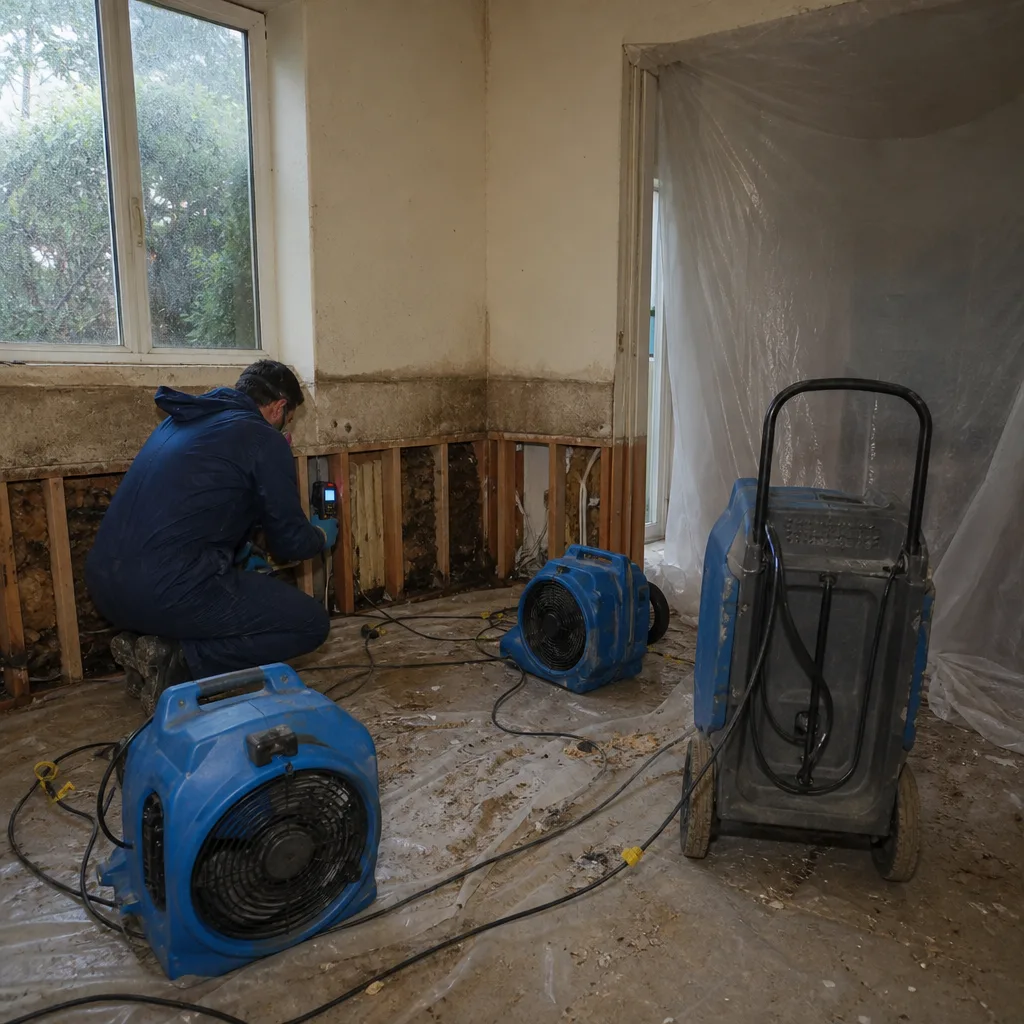 Before
 After
After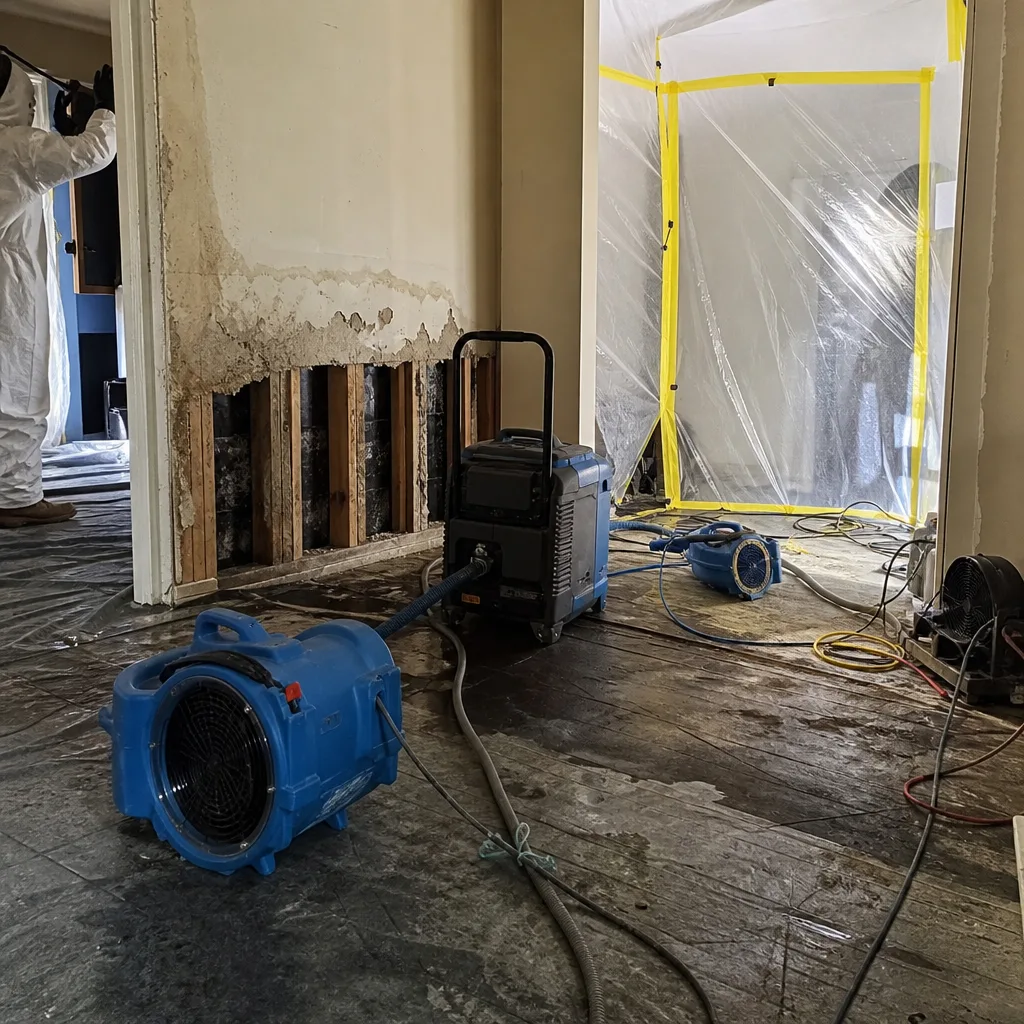 Before
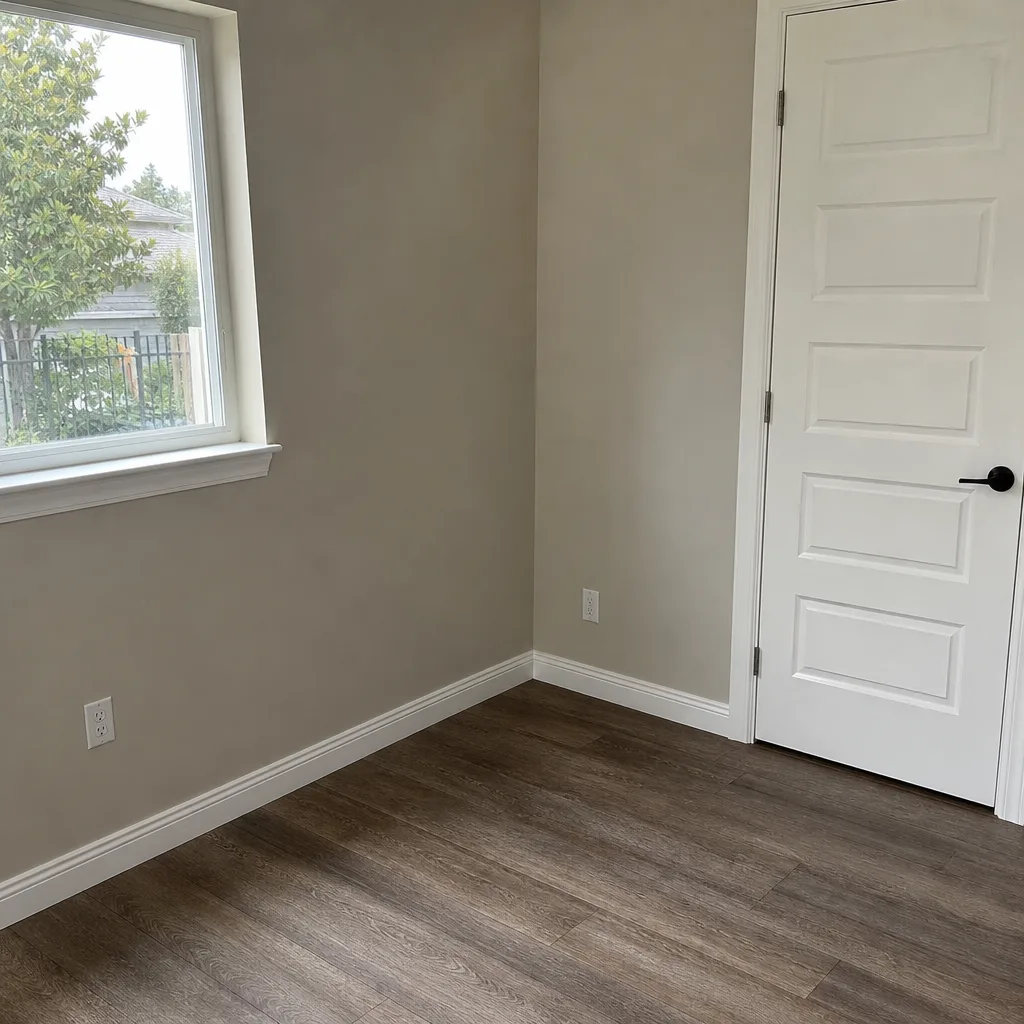 After
After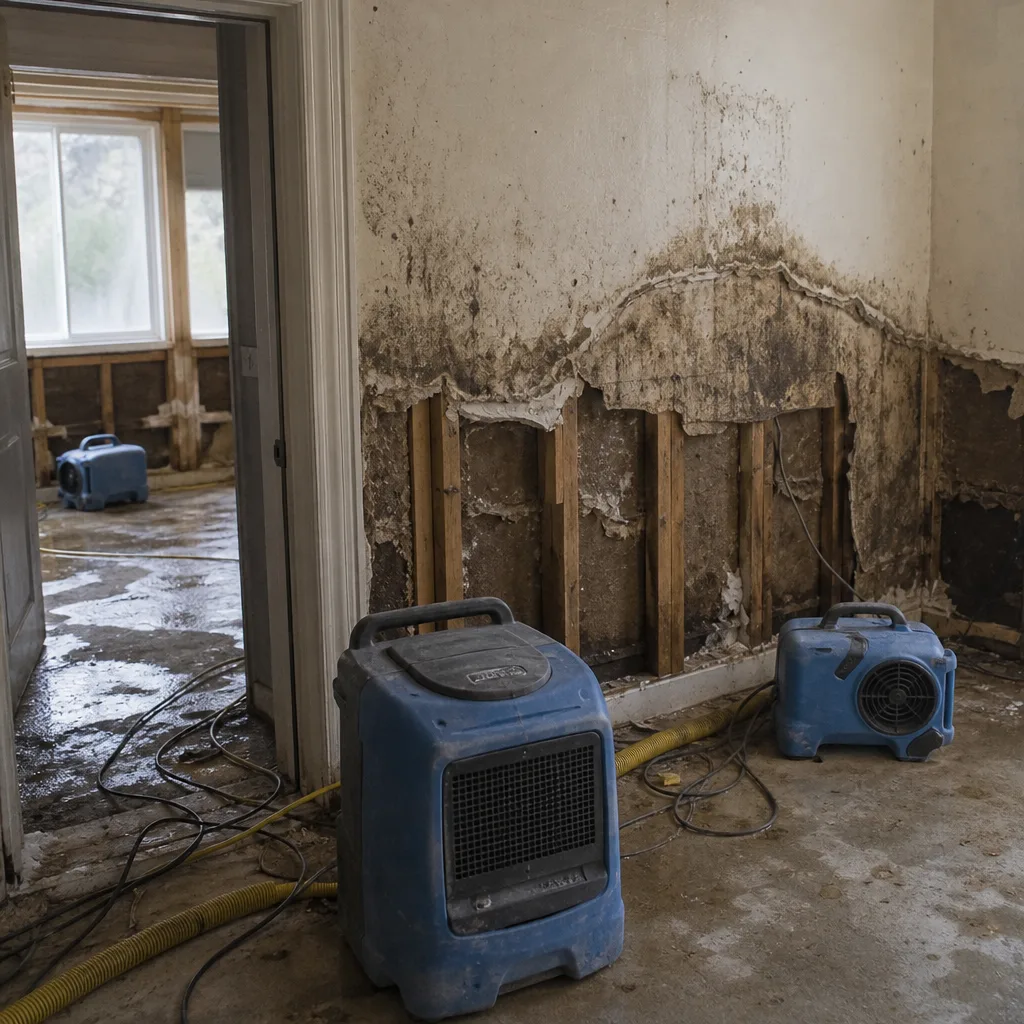 Before
 After
AfterFrequently Asked Questions
Water damage restoration in Thousand Oaks typically ranges from $2,500 to $7,500 for a standard single-room water event involving extraction, drying, and drywall repair, while multi-room or whole-house events run $10,000 to $30,000 or more depending on flooring, cabinetry, and structural involvement. The biggest variable is how long the water sat before mitigation began, which is why the 24/7 response matters; every hour of standing water compounds the cost. Call (805) 309-3324 for an exact quote based on your specific situation; estimates are free.
A disciplined restoration company in Thousand Oaks should be able to dispatch a crew the same day you call. Keegan Restoration Thousand Oaks answers every call with a live person 24/7 and dispatches from a local location to Thousand Oaks neighborhoods without the delays that come from routing through a regional call center.
Most homeowners policies in California cover sudden and accidental water damage, fire damage, and smoke damage, but every policy has exclusions, deductibles, and coverage caps that determine your out-of-pocket cost. What matters just as much as coverage is documentation; a restoration contractor with a strong documentation workflow can be the difference between a paid claim and a disputed one. Keegan Restoration Thousand Oaks documents every job and formats the file to support your insurance claim directly.
If mold growth is visible and covers more than roughly 10 square feet, or if you can smell mold but can’t see it, a cleaning will not solve the problem; the colony is likely inside wall cavities or behind surfaces, and full mold remediation per IICRC standards is the only fix. Surface cleaning without addressing the moisture source guarantees recurrence, which is why a real mold assessment in Thousand Oaks starts with finding the water, not just wiping the stain. Our Water Damage Restoration Maintenance Checklist for Thousand Oaks Homeowners covers how to spot trouble before it spreads.
A restoration contractor who runs a proper documentation workflow should coordinate directly with your adjuster, share scope and photo documentation, and keep you informed of every submission. You should never be surprised by what your carrier has received; if you are, the contractor’s documentation process is failing you. Keegan Restoration Thousand Oaks coordinates with adjusters as standard practice on every job.
That depends entirely on the contractor’s written guarantee. Most restoration contractors in Thousand Oaks offer no written guarantee beyond the minimum legal requirements, which means a failed repair becomes your problem. Keegan Restoration Thousand Oaks backs every repair with the 365-Day Done Right Promise: a written one-year guarantee with a free second visit if the repair fails within the guarantee period. If a contractor won’t put the guarantee in writing, treat the repair as having no guarantee at all.
You can, but you take on additional risk. Out-of-area contractors may not know Thousand Oaks building codes, may not understand the local moisture and fire patterns, and may be gone before you need the guarantee honored. A contractor based in or near Thousand Oaks has a local reputation to protect and a reason to answer the phone when you call with a problem.
The Bottom Line
Hiring a damage restoration contractor in Thousand Oaks is not a transaction; it’s a vetting process. The four credential checks take 20 minutes and eliminate most of the unqualified operators in the market. Contract language tells you whether the company plans to honor a written scope or exploit an open one. Technician consistency determines whether the job you’re sold is the job you get. And documentation determines whether your insurance claim lives or dies. A contractor who clears every check, writes the scope and price before work starts, sends the same background-checked crew, and documents everything is not the cheapest option in Thousand Oaks; they’re the only option that actually protects you. If you’re facing water, fire, or mold damage and want a contractor that runs to The Garrison Standard, call Keegan Restoration Thousand Oaks at (805) 309-3324 for a free estimate.
Written by Shane Pruitt, Owner at Keegan Restoration Thousand Oaks, serving Thousand Oaks since 2005.