
Last updated October 16, 2026
 Water damage drying
 Fire & smoke cleanup
 Mold remediation
 Storm response
 Sewage cleanup
 Reconstruction
Free visual inspection and a written scope of work before any mitigation begins - photos, moisture readings, and drying logs go in your claim file
The scope we write is the scope we bill. Anything new gets shown to you, in writing, before we touch it.
Get your free estimateSeasonal Damage Restoration Care for Thousand Oaks: Year-Round Homeowner’s Guide
Thousand Oaks gets fewer than 15 inches of rain in a typical year, which quietly convinces homeowners that water damage is someone else’s problem. That number hides the real story: our drainage systems, roofs, and exterior walls sit unused for ten months at a stretch, so when the first October storm arrives, it hits infrastructure that hasn’t been tested since the previous winter. This guide maps the actual seasonal risk calendar for Thousand Oaks, quarter by quarter, and gives you the specific preparation steps that national “winter prep” checklists never cover. By the time you finish reading, you’ll know what fails in your neighborhood, when it fails, and what to document before you ever need to file a claim.
Restoration work we handle
Quick Answer
Thousand Oaks runs on a four-season damage cycle: wildfire smoke infiltration in late summer, first-rain drainage failures in fall, sustained moisture and mold growth in winter, and hidden moisture lock-in during spring’s first heat. The most effective prevention is a seasonal documentation habit that records the condition of your roof, drainage, crawlspace, and HVAC system four times a year, creating a pre-existing-condition record before any damage occurs.
Table of Contents
- Q1 (January – March): The Mold Window After Consecutive Rain Weeks
- Q2 (April – June): Post-Rain Structural Assessment Before the Heat Locks In Moisture
- Q3 (July – September): Wildfire Smoke Infiltration and HVAC Contamination
- Q4 (October – December): First-Rain Failure Points Specific to Thousand Oaks
- Building a Seasonal Documentation Habit That Creates a Pre-Existing-Condition Record
- How Seasonal Documentation Supports Your Insurance Claim
- Common Mistakes to Avoid
- When to Call a Professional
- Frequently Asked Questions
- The Bottom Line
Q1 (January – March): The Mold Window After Consecutive Rain Weeks
When Thousand Oaks gets two or three consecutive weeks of rain, the ground saturates and the air stays humid long after the storms pass. That sustained moisture window, typically January through March, is when dormant mold spores in crawlspaces and attics start colonizing. The damage doesn’t announce itself with a flood. It shows up as a musty smell in a hallway, a faint discoloration on a ceiling corner, or a child’s allergy symptoms that don’t match the season.
We’ve walked into Thousand Oaks homes in February where the crawlspace had been holding moisture for six weeks. The homeowner couldn’t see it. The insulation was damp to the touch, and mold had already moved into the floor joists. By the time it’s visible inside the living space, the remediation scope is significantly larger than it would have been in week one.
Your Q1 inspection protocol
- Check the crawlspace within 48 hours after any 3+ day rain sequence ends. Look for standing water, damp soil, or condensation on the vapor barrier. If you won’t go under the house, use a flashlight from the access door and check for sheen on the ground surface.
- Inspect the attic for dark streaks on the underside of the roof decking. Those streaks are often mold, not dirt. In Thousand Oaks, the warm attic air meets a rain-cooled roof and creates condensation that feeds growth.
- Run your hand along baseboards in rooms that share a wall with exterior stucco. Stucco absorbs water through hairline cracks, and the first sign is often a baseboard that feels slightly swollen or soft at the bottom edge.
- Record what you find with photos and a date stamp. Even if everything looks fine, the record matters. If a problem develops next winter, you’ll have proof that the moisture source was weather-related, not long-term neglect.
If you find actual mold growth, don’t disturb it. Disturbing mold releases spores into the air you’re breathing. The guidance from the Mold Remediation in Thousand Oaks page on our site covers how a proper remediation is scoped, but the short version is this: containment comes first, removal second, and drying third. Skipping any step just moves the problem around your house.
Q2 (April – June): Post-Rain Structural Assessment Before the Heat Locks In Moisture
By April in Thousand Oaks, the rain has stopped and the first warm days feel like the end of the story. They’re not. Any moisture trapped inside walls, under flooring, or in the crawlspace when the heat arrives gets sealed in and accelerated. Mold doubles its colonization rate roughly every 24 to 48 hours in warm, damp, dark conditions. That April heat wave isn’t just comfortable weather; it’s an incubator for whatever winter left behind.
This quarter is about finding what’s already wet before the summer makes it worse. The process is straightforward, but it requires actually looking, not assuming.
Post-rain structural assessment checklist
- Walk the exterior foundation line. Look for efflorescence (that white chalky residue on concrete or stucco), which signals water moving through the material. In Thousand Oaks hillside homes, check the downhill side especially, since gravity concentrates water there.
- Test window sills and door thresholds for softness with a screwdriver handle. A solid thump means sound wood. A dull thud or visible indentation indicates rot that started during the wet months.
- Check the attic temperature differential. On a hot day, feel for sections of the attic that are noticeably hotter than others. That’s often where trapped moisture is creating a greenhouse effect under the roofing.
- Inspect the crawlspace again, this time for evaporation signs. Rust on ductwork straps, water staining on the subfloor underside, or a lingering damp smell after two dry weeks all point to moisture that didn’t drain on its own.
One note from our experience in Thousand Oaks: homes built into hillsides often have retaining walls or foundation elements that hold water differently than flat-lot homes. If you’re on a hillside lot in neighborhoods like Lynn Ranch or in the Conejo Valley foothills, pay extra attention to the uphill foundation wall. That wall acts like a dam, and water pressure against it builds through the winter months.
Q3 (July – September): Wildfire Smoke Infiltration and HVAC Contamination
Thousand Oaks sits in a high-risk wildfire zone. The Woolsey Fire in 2018 made that clear to every homeowner in the Conejo Valley. But the damage most people miss isn’t the fire itself. It’s the smoke that traveled miles from the burn zone and worked its way into every HVAC system, attic, and wall cavity in its path.
Smoke particles are aerosolized and microscopic. They don’t just settle on surfaces. They get pulled into return air vents, coat the blower motor, saturate the duct lining, and embed themselves in insulation. When you turn the AC on the first hot day after a smoke event, you’re circulating whatever got pulled in.
Here’s what to inspect and document before fire season peaks, which in Thousand Oaks typically runs August through November:
- Replace or clean the HVAC filter after any smoke event within 20 miles of your home. Even a “small” smoke event deposits enough fine particulate to foul a standard 1-inch filter in days.
- Remove a vent cover and photograph inside the duct with your phone. If you see gray or black film on the duct walls, that’s smoke residue. Document it before cleaning so you have a record of contamination.
- Check the attic insulation surface for gray film. Smoke rises through the eave vents and settles on the insulation. A dark top layer on insulation that was pink or yellow when installed is a contamination marker.
- Listen to the blower motor for a gritty sound. Smoke particles are abrasive. A blower that sounded fine in June but whines in September has likely accumulated particulate on the bearings or wheel.
If your home took on significant smoke, professional duct cleaning and HVAC assessment is the minimum. In our experience, homeowners who wait until the first heat wave to test the AC after a smoke season often find the system pushing contaminated air through every room. That’s a health issue before it’s a mechanical issue. The equipment used for this kind of contamination assessment includes brands like Keegan Restoration Thousand Oaks home documents on every job, not just the visible damage but the airborne contamination the homeowner can’t see.
Q4 (October – December): First-Rain Failure Points Specific to Thousand Oaks
The first significant rain of the season lands on systems that have been dry for ten months. In Thousand Oaks, there are three failure points that show up with predictable regularity, and they’re not the ones national guides mention.
1. Clogged valley gutters on Spanish-tile roofs
Thousand Oaks has a high concentration of Spanish-tile and clay-tile roofs. The valleys where two roof planes meet are natural channels for water and debris. Oak leaves, pine needles, and the fine dust that accumulates during the dry season pack into those valleys. When the first rain hits, water backs up behind the debris and runs sideways under the tile. By the time it shows up as a brown spot on a bedroom ceiling, water has been traveling through the roof structure for weeks.
Clean those valleys before the first rain. If you’re not comfortable on a ladder, hire someone who is. A fall from a roof is not worth the inspection fee.
2. Hillside drainage swales
Many Thousand Oaks homes are built on graded lots with drainage swales (shallow channels that direct water around the house). During the dry season, those swales fill with blown debris, dead vegetation, and the same fine dust that’s everywhere else. A swale that’s 40% blocked no longer directs water around your foundation. It spills it against your foundation wall.
Walk your drainage lines in September. Clear the swales, check the downspout extensions, and verify that water moves away from the structure, not toward it. This is fifteen minutes of work in the dry season and thousands of dollars of difference in the wet season.
3. Cracked stucco water pathways
Stucco expands and contracts with temperature changes, and Thousand Oaks swings from hot dry summers to cool wet winters. Hairline cracks that opened in August become water intake ports in November. Wind-driven rain in particular pushes water into those cracks, and stucco’s porous nature means water travels laterally through the material before it reaches wood framing.
Seal any crack wider than about 1/16 inch with a proper stucco repair compound before the first rain. Smaller cracks can be monitored. Larger cracks, or cracks that run from a window or door corner, should get professional attention.
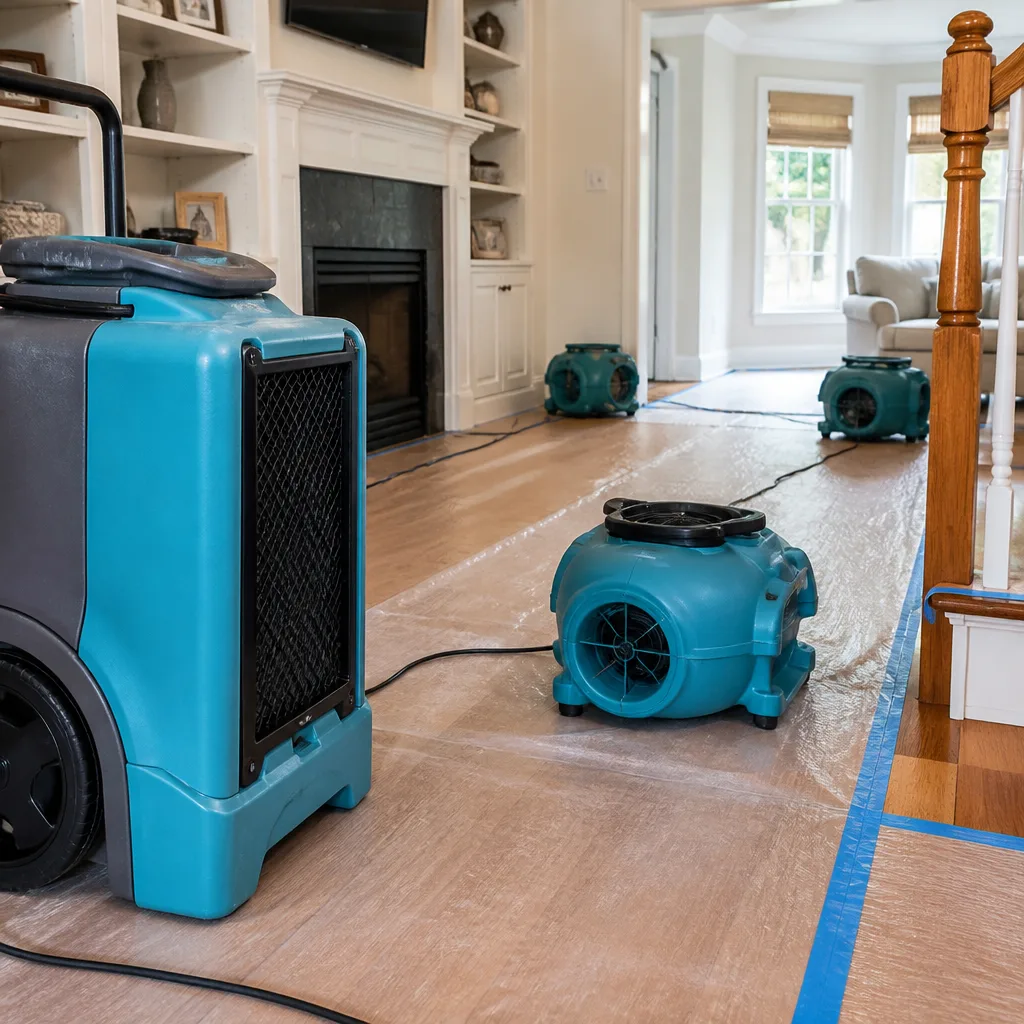
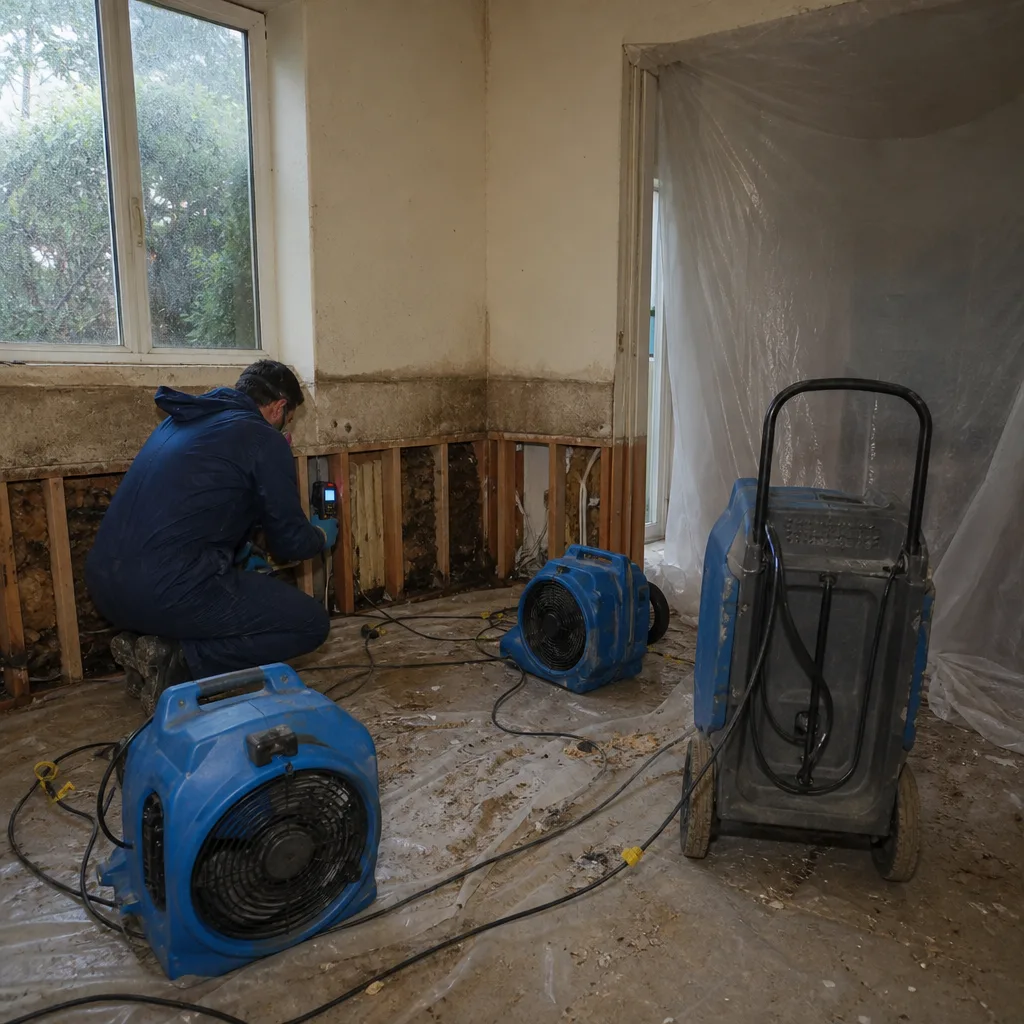
If you’re already seeing water intrusion and need to understand what full Water Damage Restoration in Thousand Oaks involves, the scope starts with stopping the source, then drying the structure with professional-grade equipment, then repairing what was damaged. In the first-rain weeks, we run drying equipment more or less constantly, because the outdoor humidity keeps reintroducing moisture even after the source is stopped.
Building a Seasonal Documentation Habit That Creates a Pre-Existing-Condition Record
The single most valuable thing you can do as a Thousand Oaks homeowner is document your property four times a year. Not because something is wrong. Because when something does go wrong, the insurance company will ask you when the damage started, and “I don’t know” is the most expensive answer in property restoration.
A pre-existing-condition record is exactly what it sounds like: dated evidence of your home’s condition before a loss. When you file a claim, the adjuster’s job is to determine what the storm did versus what was already failing. If you have dated photos from March showing a clean, dry crawlspace and dated photos from May showing water staining, you’ve just answered the adjuster’s question with evidence instead of speculation.
Here’s the habit, step by step:
- Set four calendar reminders. The third week of January, April, July, and October. These dates align with our seasonal risk windows.
- Take the same 20 photos every time. Crawlspace access point, attic interior (four directions), exterior foundation line (four sides), roof valleys from the ground, water heater area, under kitchen and bathroom sinks, and the HVAC return vent.
- Store the photos in a dedicated folder on your phone or computer. Name the folder with the date, like “House Documentation 2026-01.”
- Note anything that changed. A one-line note under a photo that says “new staining on east foundation wall” is worth more than the photo alone.
- Keep the records for at least three years. Some claims processes move slowly, and you want the history available when you need it.
This isn’t busywork. It’s the difference between a claim that gets paid and a claim that gets denied for “pre-existing conditions.” We’ve sat through enough adjuster conversations to know that the homeowner who shows up with a documentation folder gets a different conversation than the one who shows up with no records and a story.
How Seasonal Documentation Supports Your Insurance Claim
Insurance adjusters work on evidence, not narrative. When you file a water, fire, or mold claim, the adjuster needs to establish three things: what happened, when it happened, and what it will cost to fix. Your seasonal documentation supplies the first two, which makes the third one defensible.
A homeowner with a documented history of seasonal inspections is telling the carrier: I know my house, I pay attention, and this damage is new. That’s a powerful position. It’s also the reason we run every job at Fire Damage Restoration in Thousand Oaks and our other service lines to the same standard: written scope of loss, photo documentation at every stage, and direct coordination with adjusters. The documentation habit you build as a homeowner extends into the professional phase if you ever need it.
One thing to understand about the way claims work: the insurance company is not necessarily your adversary, but the claims process rewards the homeowner who has evidence. A photo you take in July proving a clean crawlspace is not just a nice habit. It’s a piece of evidence in a conversation that would otherwise happen months later with no record. Shane Pruitt, who leads our Thousand Oaks team, tells homeowners to document first and ask questions second, because the documentation has no downside and the absence of it has no upside.
Common Mistakes to Avoid
- Treating Thousand Oaks rain like it’s not a real threat. Our annual rainfall is low, but our infrastructure sits unused for ten months. The first rain catches systems that haven’t been tested, which is why first-rain damage is often worse than mid-winter damage in wetter climates.
- Ignoring the attic during the wet season. Most homeowners think about basements and crawlspaces when they think about moisture. In Thousand Oaks, the attic is often the first place mold starts, thanks to warm air meeting a rain-cooled roof.
- Skipping the HVAC after wildfire smoke. Smoke contamination doesn’t wash away with the next rain. It sits in the ductwork and insulation until someone addresses it, and every AC cycle redistributes it into the living space.
- Assuming visible mold is the whole problem. Mold you can see is usually the minority of the growth. The colony extends into the material behind the visible surface. Surface cleaning without proper containment and drying just spreads the spores you can’t see.
- Filing a claim without any documentation. The insurance company will make a determination either way. The homeowner who can show dated evidence of prior clean condition is playing a different game than the one who can’t.
- Deferring maintenance on drainage swales and roof valleys. These are dry-season chores that no one wants to do, but they’re the two most common first-rain failure points in Thousand Oaks. Fifteen minutes of September clearing beats a February remediation.
- Going with the first contractor who answers the phone after a loss. A damage restoration emergency is the worst time to make a hiring decision without understanding the company’s pricing model and documentation standard. We put the price in writing before any work starts, which means you know the scope before you sign anything.
When to Call a Professional
Some problems are seasonal inspection items. Others are restoration emergencies that require professional equipment and trained technicians. Call a professional if you find active water intrusion that has been running for more than 24 hours, visible mold growth larger than a dinner plate, water in the electrical panel area, sagging drywall or bubbling paint on a ceiling, or any fire or smoke contamination that affects the HVAC system. Those are not DIY situations. The drying and remediation equipment used for these jobs includes Dri-Eaz and Phoenix air movers, desiccant dehumidifiers, and injection drying systems like Injectidry, all operated to IICRC industry standards. Keegan Restoration Thousand Oaks offers free estimates in Thousand Oaks. Call (805) 309-3324 and a live person answers, any hour, any day.
Frequently Asked Questions
The most common seasonal damage in Thousand Oaks is first-rain water intrusion through clogged roof valleys and blocked drainage swales, which happens because our dry season lets debris accumulate for ten months before the rain tests the system. Call (805) 309-3324 if you find active water intrusion; we’ll give you a written price before any work starts.
Homeowners insurance covers mold remediation if the moisture source is a covered peril, which typically means a sudden event like a burst pipe or storm-driven leak, not long-term humidity or deferred maintenance. Your seasonal documentation is critical here, because it proves when the moisture was first noticeable and whether it was sudden or gradual.
Inspect your Thousand Oaks home four times a year, aligning with the quarterly risk windows we map in this guide: once in January for post-rain moisture, once in April for structural assessment, once in July for fire season prep, and once in October before first rain. Each inspection takes under an hour if you follow the protocols above.
Insurance coverage for wildfire smoke damage depends on your policy language and whether physical residue or contamination can be documented, which is why we recommend photographing duct interiors and insulation surfaces before any cleaning. The stronger your documentation, the more defensible the claim becomes.
You should act the same day you find active water damage, because mold colonization begins within 24 to 48 hours in our climate and the damage spreads while you wait. Keegan Restoration Thousand Oaks has a live person answering calls 24 hours a day at (805) 309-3324, so you can reach us at 2 a.m. if that’s when you find it.
Seasonal water damage repair in Thousand Oaks typically runs anywhere from a few hundred dollars for minor stucco sealing and gutter clearing to several thousand for full dry-out and mold remediation, depending on how long the water has been running and what materials got wet. The fastest way to get an accurate number is to call (805) 309-3324 for a written estimate before you commit to anything.
The Bottom Line
Thousand Oaks runs a predictable seasonal cycle: dry season builds the conditions, first rain triggers the failures, winter sustains the moisture, and spring seals it in. The homes that survive that cycle in good shape are not the ones that react to damage after it appears. They’re the ones that document their condition four times a year, clear their drainage before the first rain, address their roof valleys and stucco cracks in September, and check their HVAC and attic after every smoke event. That habit costs about four hours a year. The alternative costs whatever a restoration job runs when the damage has had weeks to spread. If you find something that needs a professional eye, Keegan Restoration Thousand Oaks is here for water damage, fire damage, and mold remediation in Thousand Oaks and throughout the Conejo Valley. Written price before work starts, background-checked uniformed technicians, and a full-year written guarantee on every repair. Call (805) 309-3324 and you’ll reach a person, not a menu.
Written by Shane Pruitt, Owner at Keegan Restoration Thousand Oaks, serving Thousand Oaks since 2005.
See the difference
 Before
 After
After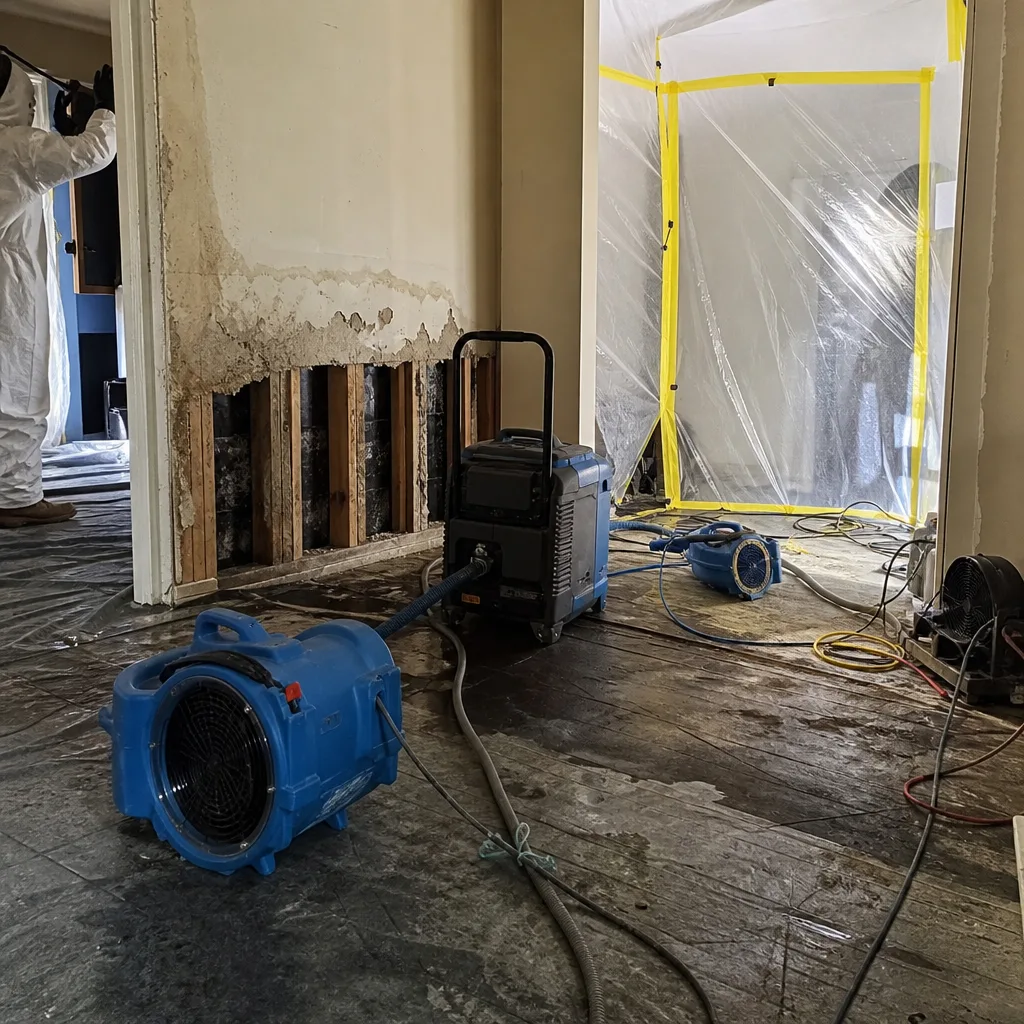 Before
 After
After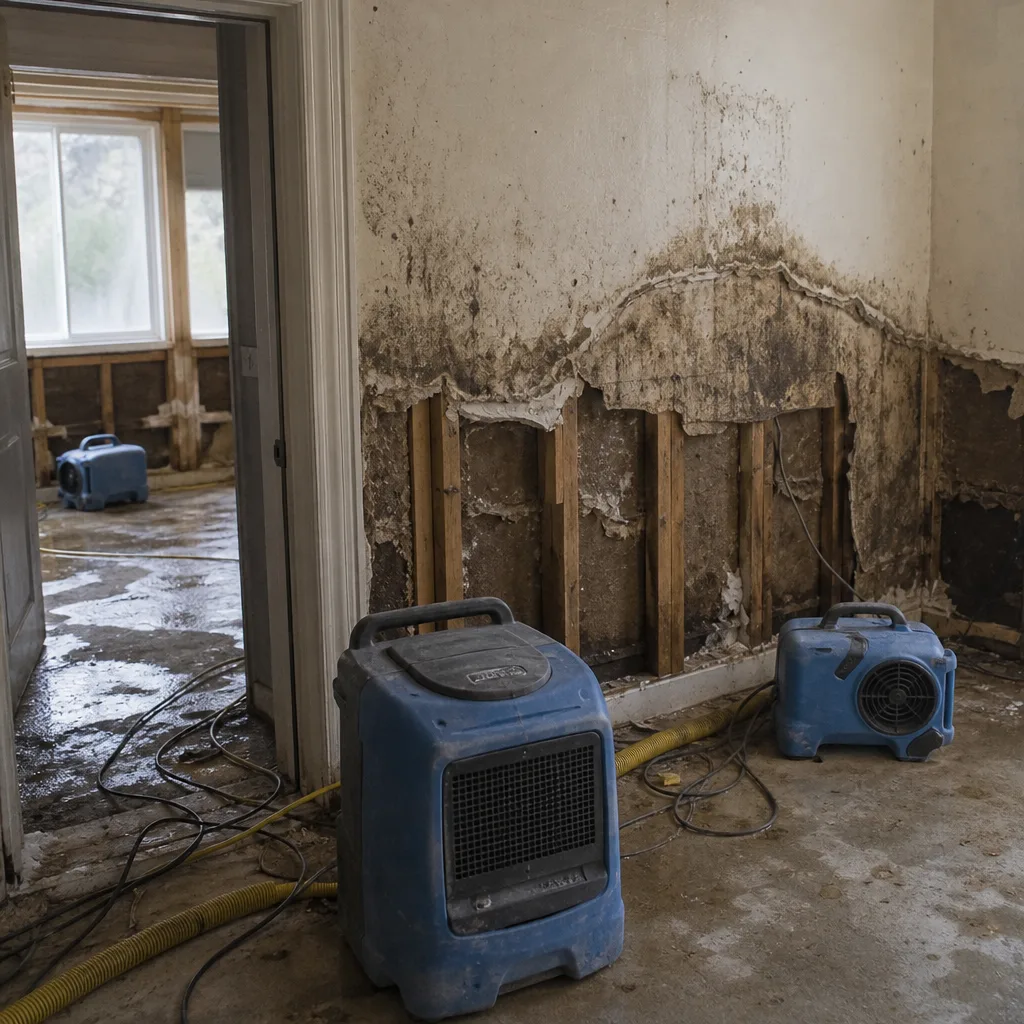 Before
 After
After