
Last updated October 16, 2026
 Water damage drying
 Fire & smoke cleanup
 Mold remediation
 Storm response
 Sewage cleanup
 Reconstruction
Free visual inspection and a written scope of work before any mitigation begins - photos, moisture readings, and drying logs go in your claim file
The scope we write is the scope we bill. Anything new gets shown to you, in writing, before we touch it.
Get your free estimateDamage Restoration Permits, Codes & Inspections in CA: What You Need to Know
A Thousand Oaks homeowner listed their house for sale in the spring. Three years earlier, a water heater had leaked into a load-bearing wall. The restoration crew fixed the drywall, replaced the framing, and moved on. During escrow, the buyer’s lender pulled the permit history and found nothing. The wall repair had never been permitted. The deal died on the spot, and the original contractor had changed phone numbers. The homeowner was left holding a house with an unpermitted structural repair, facing either a rushed permit after the fact or a permanent note on the disclosure forms. This is the quiet failure of California’s restoration industry: the work looks finished, but the paper trail determines whether it was actually done right.
This guide explains which restoration scopes require permits in Ventura County, who legally pulls them, how Thousand Oaks municipal codes and California’s Title 24 intersect with water, fire, and mold work, and how to verify a closed permit before you ever list your home. If you’ve been burned by a contractor who skipped the paperwork, this is written for you.
Quick Answer
Structural repairs, electrical work, HVAC duct replacement, and any modification to load-bearing walls after water, fire, or mold damage require a building permit in Ventura County and the City of Thousand Oaks. The contractor is typically responsible for pulling permits, but the legal liability for an unpermitted repair falls on the homeowner, not the contractor. Structural drying (running fans and dehumidifiers) does not require a permit. Verify every permit is closed before paying the final invoice.
Restoration work we handle
Table of Contents
- Which Restoration Scopes Trigger a Ventura County Permit?
- Who Is Legally Responsible for Pulling the Permit?
- How Title 24 and Thousand Oaks Municipal Codes Apply to Restoration
- The Inspection Sequence: What Inspectors Check at Each Stage
- How to Verify a Closed Permit After the Job
- How Permits Affect Your Insurance Claim
- Open Permits, Resale, and Lender Requirements
- Common Mistakes to Avoid
- When to Call a Professional
- Frequently Asked Questions
- The Bottom Line
Which Restoration Scopes Trigger a Ventura County Permit?
The line between “cleanup” and “construction” is where permits begin. In Ventura County, and specifically in Thousand Oaks, the determining factor is whether the restoration work touches the structure, the electrical system, or the mechanical systems of the house. Here is the breakdown, based on what we see in the field and what the building department enforces.
No Permit Required: Mitigation and Drying
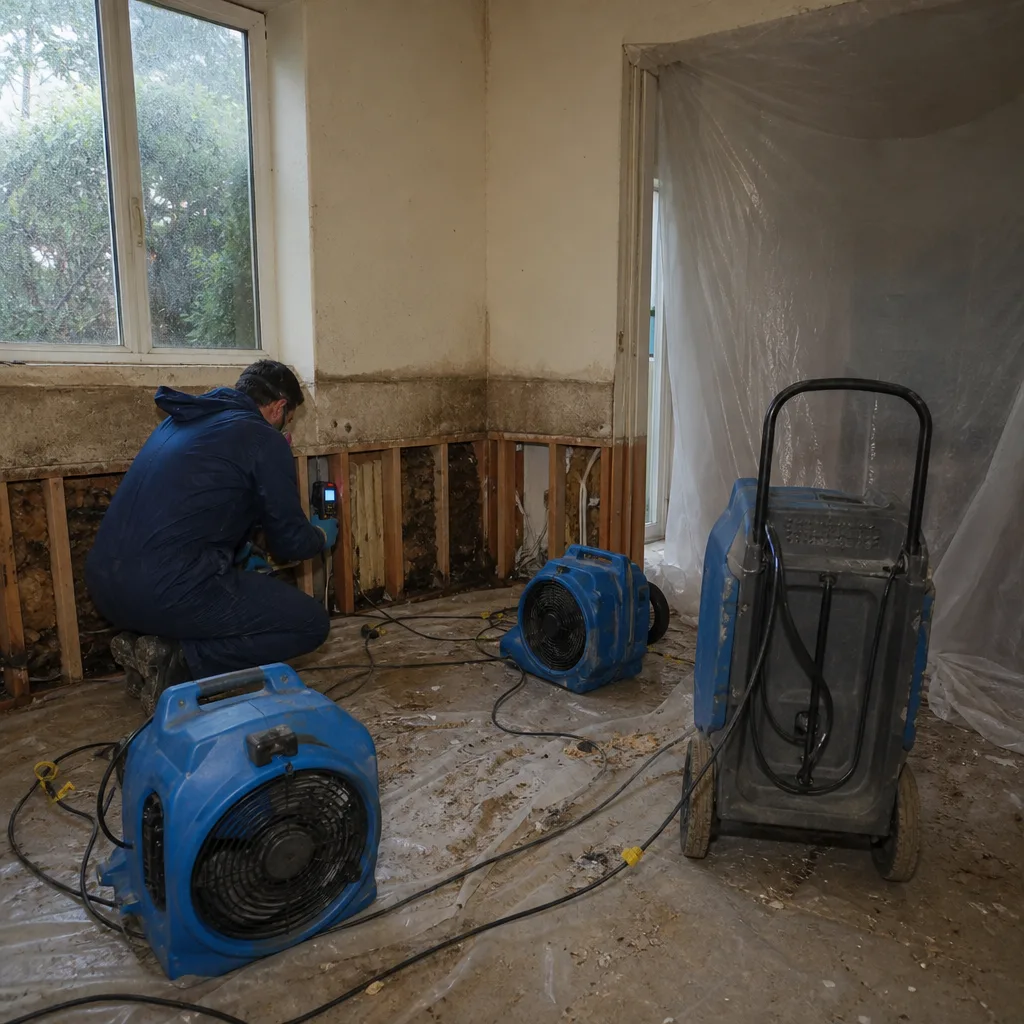
- Water extraction and structural drying: Running truck-mounted extraction units, air movers, and dehumidifiers to dry out wet drywall, flooring, and framing. This is considered mitigation, not construction. No permit needed.
- Mold containment and surface remediation: Setting up containment barriers, HEPA-filtering the air, and removing mold from non-structural surfaces. No permit needed for the remediation itself.
- Content cleaning and pack-out: Cleaning, drying, and storing personal property. No permit needed.
- Demolition for access: Removing wet drywall, carpet, pad, and insulation to expose framing. No permit needed, as long as you don’t cut structural members.
Permit Required: Reconstruction and Repair
- Structural repairs: Any replacement or reinforcement of studs, joists, beams, headers, sill plates, or roof trusses. If the damage reached the bones of the house, you need a permit.
- Load-bearing wall involvement: If a water leak or fire damaged a wall that carries weight from above, any repair to that wall requires a permit and likely an engineer’s letter.
- Electrical work: Replacing wiring, outlets, switches, or panels that were exposed to water or fire. Even a single outlet replacement in a wet wall can trigger a permit requirement under the California Electrical Code.
- HVAC duct replacement: If smoke from a fire or mold contamination inside ductwork requires replacing duct runs, that is a mechanical permit item in Ventura County.
- Window and door replacement: If fire or water damage requires replacing windows or exterior doors, a permit is needed to verify proper flashing and egress compliance.
- Insulation replacement: In most cases, replacing insulation in an existing wall cavity does not require a permit. But if the wall cavity is opened during a load-bearing repair, the insulation work gets folded into the structural permit.
In Thousand Oaks specifically, the Building Division reviews restoration scopes through the lens of the California Building Code (CBC) and the California Residential Code (CRC). The city is aggressive about structural integrity because of the area’s seismic exposure. A wall that was repaired without a permit after water damage may not meet current shear wall requirements, which matters in an earthquake zone.
Who Is Legally Responsible for Pulling the Permit?
The short answer: the contractor should pull the permit, but the homeowner carries the legal liability if they don’t.
Under California Business and Professions Code Section 7031, a contractor performing work that requires a permit must be licensed and must obtain the permit before starting. If a contractor performs work without a permit, the homeowner can file a complaint with the Contractors State License Board (CSLB), and the contractor can face fines or license suspension. But here’s the catch: the homeowner still owns the unpermitted work. The building department can require the homeowner to legalize the work after the fact, even years later. And the contractor, if unreachable or out of business, leaves the homeowner holding the full cost of retroactive permitting.
This is why the responsible framing is not “who gets in trouble” but “who gets stuck.” The homeowner gets stuck. Every time.
How to Confirm the Permit in Writing Before Work Starts
- Ask the contractor to name the specific permits required for the scope. A real answer sounds like: “This needs a building permit for the shear wall repair and an electrical permit for the rewiring.” A vague answer is a red flag.
- Get the permit number before demo starts. In Thousand Oaks, permits are issued by the Building Division at City Hall. A legitimate contractor can provide the permit number within a day or two of filing.
- Verify the permit online. The City of Thousand Oaks maintains an online permit portal where homeowners can search by address and see active and closed permits.
- Write the permit condition into the contract. The contract should state: “Contractor is responsible for obtaining all required permits and scheduling all required inspections. Final payment is contingent upon a signed final inspection and a closed permit.”
- Never accept “it’s just a repair, we don’t need a permit” without checking. Call the Thousand Oaks Building Division directly. They answer the phone and will tell you whether your scope requires a permit. The call takes five minutes.
In our restoration work, the permit discussion happens during the scope of loss review, before any equipment gets set up. The written scope we provide includes a permits section that names the specific permits, the issuing authority, and who is responsible for them. That piece of paper protects the homeowner more than any verbal promise.
How Title 24 and Thousand Oaks Municipal Codes Apply to Restoration
California’s Title 24, the California Building Standards Code, applies to all construction in the state, including restoration work. The Thousand Oaks municipal code adds local amendments on top of Title 24. Here is what actually matters for a damage restoration project.
Title 24 Energy Standards
If your restoration involves replacing insulation, windows, or HVAC equipment, the work must meet current Title 24 energy efficiency requirements. For example, if a fire damaged your HVAC system and the condenser unit needs replacement, the new unit must meet the current Seasonal Energy Efficiency Ratio (SEER) standards, which changed in 2023. A restoration contractor who installs old-stock equipment to save money is creating a code violation that will surface at the next resale inspection.
Title 24 Part 2: California Building Code (CBC)
The CBC governs structural repairs, including load-bearing wall repairs, shear wall requirements, and foundation work. In Thousand Oaks, which sits in a high-seismic zone, the city enforces the CBC’s seismic provisions strictly. A water-damaged shear wall that gets replaced without a permit and without an inspection has never been verified to meet the code’s nailing and strapping requirements.
Thousand Oaks Municipal Code Specifics
- Mold remediation disclosure: Thousand Oaks follows California’s Toxic Mold Protection Act (the “Aiming at A-to-Z” law), which requires written disclosure when a property has known mold contamination exceeding certain thresholds. Restoration companies working on mold jobs are expected to document the remediation and provide clearance verification.
- Fire-damaged structures: The Thousand Oaks Fire Department reviews fire restoration scopes for smoke and structural damage. If a fire compromised roof framing or floor joists, the Fire Department’s sign-off is part of the permit package.
- Water heater replacements: Thousand Oaks requires a permit for water heater replacement, which is a common restoration trigger since so many water damage jobs start with a failed water heater.
- Re-roofing after fire or storm damage: A re-roof permit is required, and the city enforces current Title 24 cool roof standards for any re-roof.
The pattern here is straightforward: restoration work that touches energy, structure, or mechanical systems gets pulled into code compliance. Contractors who skip permits are also, almost always, skipping code compliance. The permit is the mechanism that proves the work was done to code.
The Inspection Sequence: What Inspectors Check at Each Stage
For permitted restoration work in Thousand Oaks, the inspection process follows a predictable sequence. Understanding it helps you know what should happen on your job and when.
Stage 1: Rough-In Inspection
After demolition and before drywall goes back up, the inspector comes to look at what is exposed. They check framing repairs, electrical rough-in (wiring and boxes before outlets and switches are installed), plumbing rough-in (pipes, drains, and water supply lines), and HVAC ductwork before it is covered. This is the most important inspection on a restoration job. If the work is covered up before this inspection happens, the inspector will require it to be opened back up.
Stage 2: Insulation and Moisture Barrier Inspection
In some cases, particularly for exterior walls that were opened for drying, the inspector verifies insulation installation and moisture barrier placement before drywall. This is also where a mold clearance certificate from a third-party indoor environmental professional may be required if the restoration involved mold remediation.
Stage 3: Final Inspection
The final inspection verifies that all work is complete, the electrical and mechanical systems are functioning, and the site meets code. The inspector signs off, and the permit is closed. The homeowner receives a final inspection report and a certificate of occupancy if the scope required one.
One thing we tell every Thousand Oaks homeowner: be present for inspections. The inspector can point out issues that the contractor should fix, and you can ask questions directly. A contractor who discourages you from being present during an inspection is a contractor to run from.
How to Verify a Closed Permit After the Job
An open permit is a hole in your property’s record. It sits there silently until you try to sell, refinance, or pull another permit, and then it surfaces at the worst possible moment. Here is the verification process, step by step.
- Get the permit number from the contractor. It should be on the final invoice. If the contractor says they pulled the permit but won’t give you the number, that is a near-certain sign the permit was never pulled.
- Search the Thousand Oaks online permit portal. Enter your address. The portal shows active, closed, and expired permits. Open permits are flagged.
- Call the Building Division if the portal is unclear. The City of Thousand Oaks Building Division can pull up your property’s permit history on the phone in minutes.
- Request a final inspection report. The contractor should provide a copy. If they can’t, call the Building Division and request it directly. These are public records.
- Check the Ventura County Assessor’s office if the work involved square footage changes. Alterations that changed the footprint or added square footage need to be reflected in the assessor’s records, and a permit is the trigger for that update.
If you find an open permit from a previous contractor, do not ignore it. Contact the Building Division to understand what is needed to close it. In many cases, an inspector simply needs to come out and verify that the work was completed. In worse cases, drywall needs to be opened to expose framing or wiring. The cost is almost always lower than the cost of a lost sale or a lender killing a refinance.
How Permits Affect Your Insurance Claim
Insurance companies care about permits in two ways: before the claim and after.
Before the claim: If a water heater leaked and damaged a load-bearing wall, the insurance adjuster writes a scope that assumes the repair will be done to code, with permits if required. If the contractor skips the permit, the insurance company can deny the portion of the claim that covers the structural repair. In practice, this is rare on the first pass, but it becomes devastating on the second pass. If the work fails and the homeowner files a second claim for the same damaged area, the adjuster will investigate. They find no permit, no inspection record, and now they have grounds to deny the new claim as “improper prior repair.”
After the claim: Insurance companies increasingly require a copy of the closed permit as part of the claim’s final documentation. If the restoration company cannot produce one, the claim can be delayed, reduced, or reopened.
The practical advice is simple: document permits the same way you document everything else on an insurance restoration. Photo documentation of the damage, the repair, and the permit paperwork. If the work is permitted and inspected, the insurance company has no angle to dispute that the work was done right.
Open Permits, Resale, and Lender Requirements
The resale failure we opened with is not an anomaly. Lenders in California increasingly require clean permit histories as a condition of financing. Here is how it plays out in Thousand Oaks real estate.
Lender Due Diligence
Most mortgage lenders now run permit searches as part of their due diligence on any property going under contract. FHA, VA, and conventional lenders all have specific requirements around unpermitted work. If unpermitted work is discovered, the lender can require the seller to:
- Obtain a retroactive permit (often requiring opening walls or exposing work)
- Reduce the sale price to account for the cost of legalization
- Disclose the unpermitted work on the TDS (Transfer Disclosure Statement) and the SPQ (Seller Property Questionnaire)
- Cancel the loan entirely if the unpermitted work affects safety or structural integrity
The Disclosures Problem
California law requires sellers to disclose all known material facts about the property, including unpermitted work. If a homeowner knows a previous restoration was unpermitted and does not disclose it, the buyer can sue for fraud after the sale. This means the unpermitted work follows the property forever, reducing its marketability with every disclosure cycle.
Thousand Oaks Specifics
The Thousand Oaks real estate market is active, with many homes built between the 1960s and 1990s. These homes have had decades of water heaters fail, pipes leak, and the occasional small fire. The permit history on any given Thousand Oaks home tells the story of how well it has been maintained. A clean permit history is a selling point. A missing permit for a structural repair is a negotiation point against the seller.
The Keegan Restoration Thousand Oaks home page provides more context on how restoration work should be documented from day one. When you understand the resale consequences, the permit process stops feeling like bureaucracy and starts feeling like insurance for your equity.
Common Mistakes to Avoid
- Assuming the contractor handles permits automatically. Many restoration contractors operate on speed and volume. They tell the homeowner “we don’t need a permit for this” and the homeowner believes them. The homeowner is the one who carries the liability, not the contractor.
- Skipping the permit to save time. In Thousand Oaks, a standard repair permit can be issued in a few days. The trade-off of months or years of liability for a three-day wait is a bad deal.
- Paying the final invoice before verifying the permit is closed. Once the contractor has your money, the leverage is gone. Verify the closed permit before releasing final payment.
- Accepting verbal confirmation of permit status. “Yeah, we pulled the permit” means nothing. Get the permit number and verify it on the city portal.
- Not being present for inspections. The inspection is your chance to hear directly from the city about whether the work was done right. Contractors who schedule inspections when the homeowner is unavailable are, sometimes, hiding something.
- Using a contractor who is not licensed in California. Unlicensed contractors cannot legally pull permits in their own name. If your contractor’s name is not on the permit, that is a problem. Verify the license with the CSLB before signing anything.
- Ignoring open permits discovered at resale. Some homeowners hope the open permit will not be noticed. Lenders notice. The cost of ignoring it is always higher than the cost of resolving it.
When to Call a Professional
If your water damage involved anything beyond surface cleanup, you need a restoration company that treats permits as part of the job, not an afterthought. Specific scenarios where you should call: water damage behind walls that may have touched framing, fire damage to any part of the structure, mold remediation that requires drywall removal, any electrical or HVAC exposure to water or smoke, and any repair to a load-bearing wall. Keegan Restoration Thousand Oaks offers free estimates in Thousand Oaks. Call (805) 309-3324 and a live person answers, 24/7. We walk you through the permit requirements for your specific scope before any work starts.
Frequently Asked Questions
No. Structural drying (running extraction equipment, air movers, and dehumidifiers to dry out wet building materials) is mitigation work and does not require a permit. The permit requirement begins when you start repairing or replacing structural components, electrical systems, or mechanical systems.
The restoration contractor should pull the permit, but California law places the legal liability for unpermitted work on the homeowner. Before work starts, get the permit requirement in writing in the contract and verify the permit number on the City of Thousand Oaks online portal.
You can list it, but lenders will likely discover the open permit during due diligence. The buyer’s lender can require retroactive permitting, a price reduction, or loan denial. The safer path is to close the permit before listing. Contact the Thousand Oaks Building Division to determine what is required to close it.
In most cases, yes. Permit fees are a standard line item in restoration scopes approved by insurance adjusters, as long as the permit is required for the repair. If the contractor skips the permit and the insurance company later discovers unpermitted work, the claim can be complicated. Ask your adjuster to confirm permit fee coverage in writing.
A standard repair permit for non-structural work can be issued in two to five business days. Structural repairs requiring engineering review can take two to four weeks. Emergency repairs can sometimes qualify for an expedited review if the home is uninhabitable. The key is filing early, not waiting until demo day.
Removing drywall for mold remediation is mitigation and does not require a permit. But if the drywall removal exposes structural framing that needs repair, or if the remediation requires replacing electrical wiring or ducts inside the wall cavity, then a permit is required for those specific repair items. The remediation contractor should coordinate with the building division on the permit scope.
The Bottom Line
Unpermitted restoration work costs California homeowners more than any other single error in the restoration process. It kills sales, complicates insurance claims, and leaves homeowners legally exposed for years after the contractor has moved on. The solution is not complicated: get the permit scope in writing before work starts, confirm the permit number, be present for inspections, and verify the permit is closed before final payment. In Thousand Oaks, the Building Division is accessible and helpful to homeowners who take the time to call. A good restoration company makes the permit process visible and verifiable from day one.
Written by Shane Pruitt, Owner at Keegan Restoration Thousand Oaks, serving Thousand Oaks since 2005. Browse more guides & resources.
Contact Keegan Restoration Thousand Oaks
If you’re facing water, fire, or mold damage and want a restoration company that puts permits and code compliance in writing, call us at (805) 309-3324. A live person answers, 24/7. We provide free estimates, written scopes of loss, and a 365-Day Done Right Promise on every repair. For more on our water damage process, see our Water Damage Restoration in Thousand Oaks page. For fire and smoke work, visit Fire Damage Restoration in Thousand Oaks. For mold-specific detail, see Mold Remediation in Thousand Oaks.
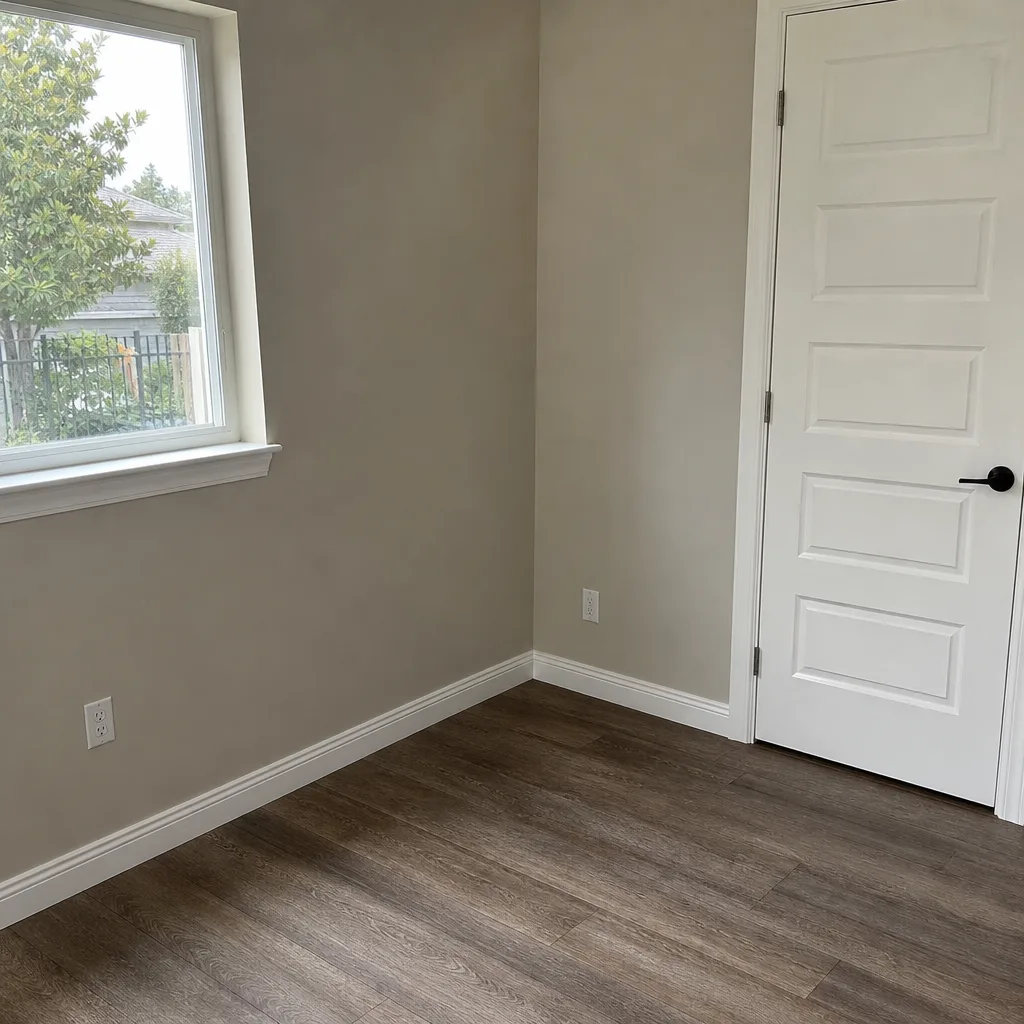
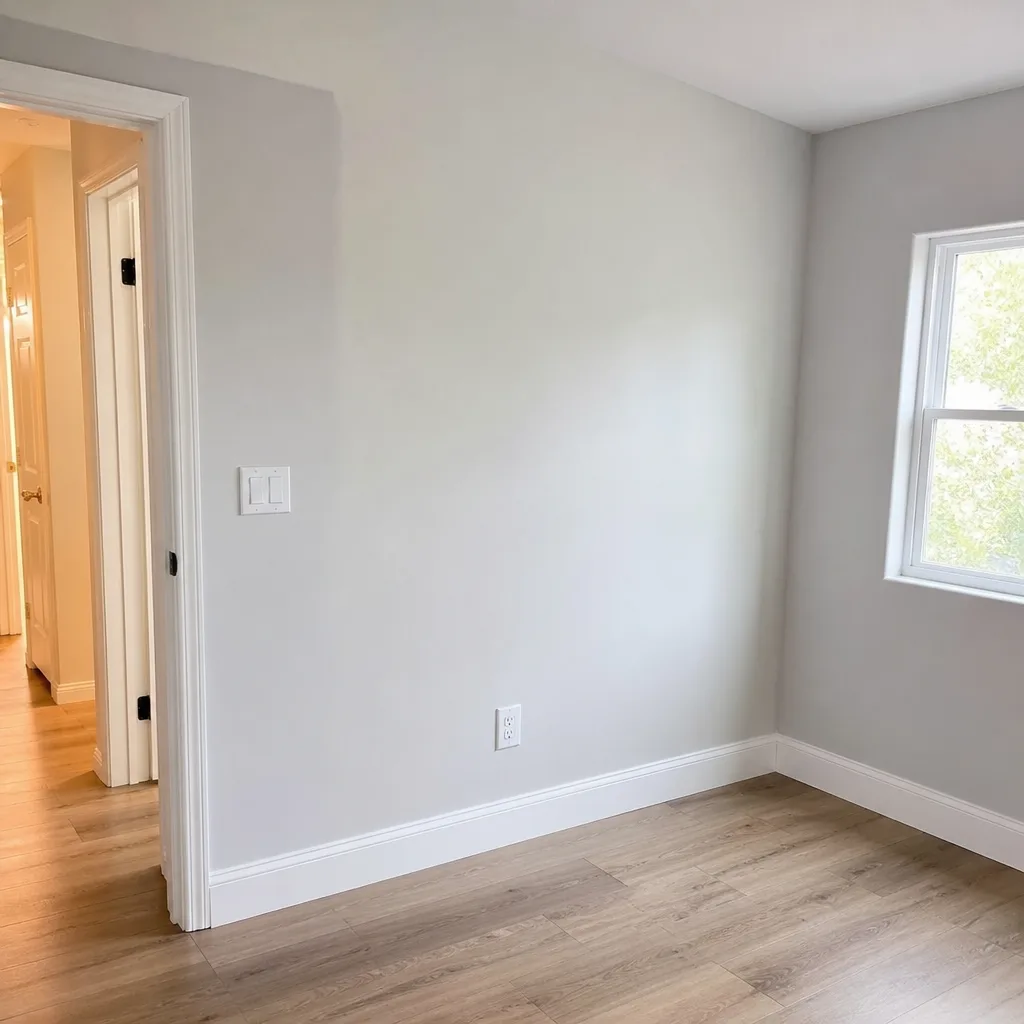
See the difference
 Before
 After
After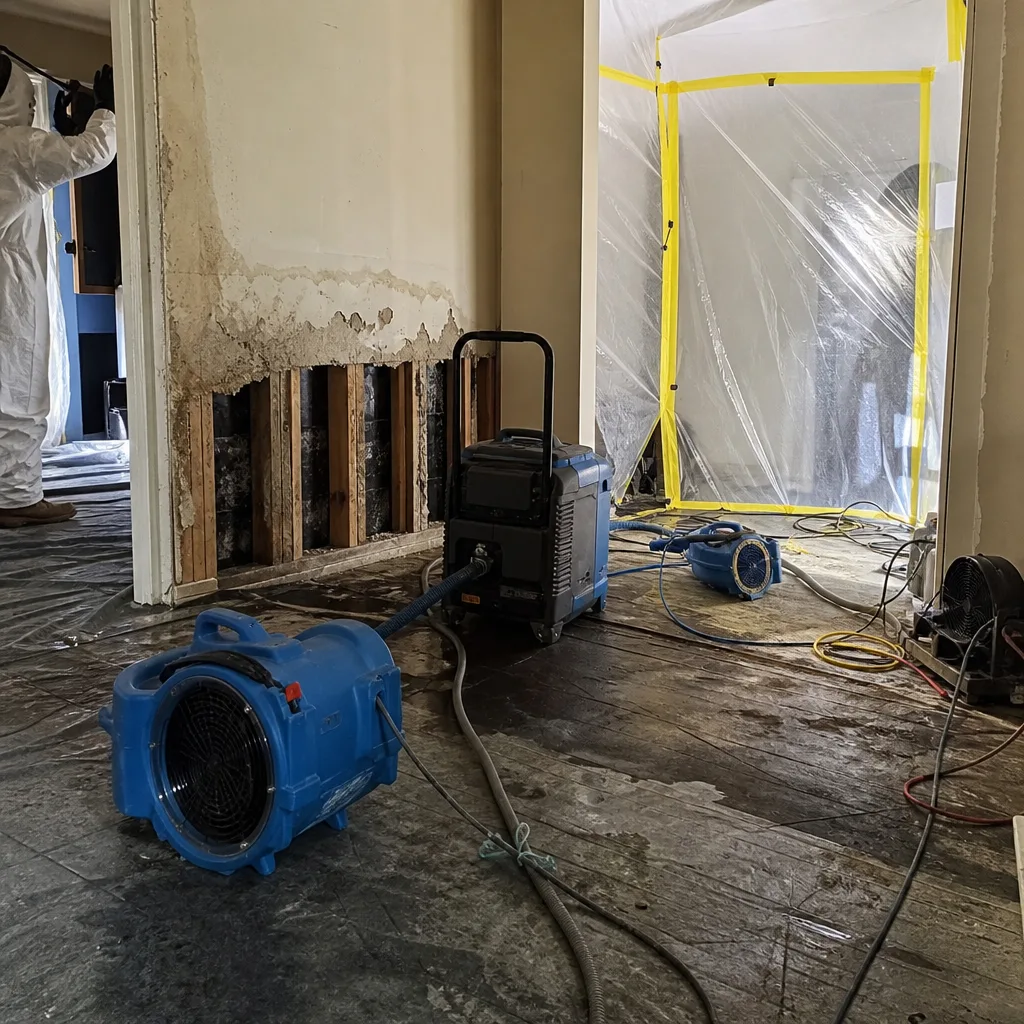 Before
 After
After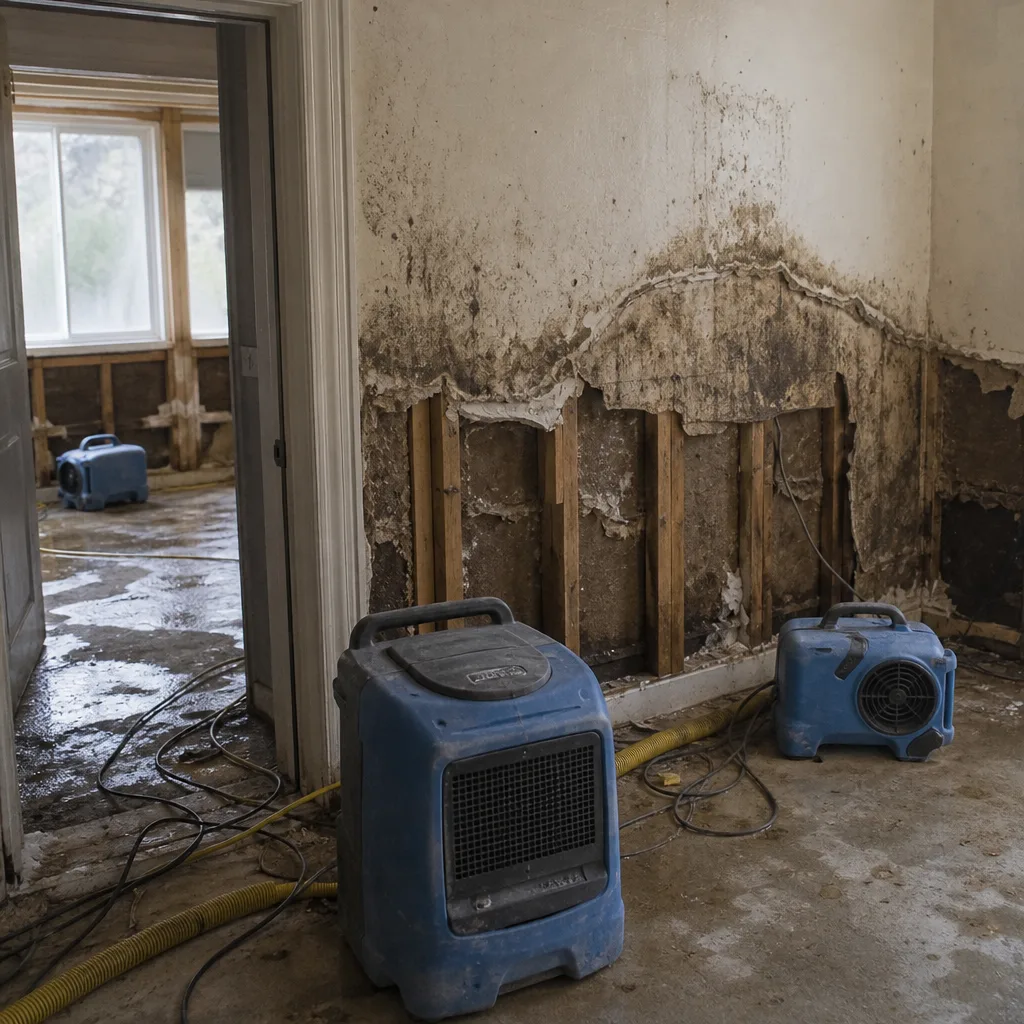 Before
 After
After