
Last updated October 16, 2026
 Water damage drying
 Fire & smoke cleanup
 Mold remediation
 Storm response
 Sewage cleanup
 Reconstruction
Free visual inspection and a written scope of work before any mitigation begins - photos, moisture readings, and drying logs go in your claim file
The scope we write is the scope we bill. Anything new gets shown to you, in writing, before we touch it.
Get your free estimateDamage Restoration Cost Breakdown: The Thousand Oaks Homeowner’s Reference for 2026
Two Thousand Oaks homeowners with nearly identical water damage scopes received quotes of $4,200 and $9,800 from different contractors this year. The lower quote omitted structural drying documentation formatted for insurance. The higher quote included it. The first homeowner’s claim was partially denied. The second was reimbursed in full. This guide and our DIY vs Professional Damage Restoration: The Thousand Oaks Homeowner’s Decision Guide exist because that gap, between a cheap quote and a reimbursable one, is where most restoration pricing confusion lives. We’ll break down every line item, explain what drives cost differences between contractors, and show you how to read a quote so you know whether you’re comparing equivalent work or subsidizing someone’s shortcuts.
Restoration work we handle
Quick Answer
Water damage restoration in Thousand Oaks typically costs $3.50 to $7.50 per affected square foot for mitigation only, $15 to $30 per square foot when reconstruction is included. Mold remediation ranges $1,500 to $6,000 for contained areas, while fire and smoke restoration runs $4,000 to $35,000 depending on surface area and severity. A written guaranteed price before work starts, not a “not to exceed” estimate, is the single most important factor in controlling final cost.
Table of Contents
- The Standard Cost Categories in a Legitimate Restoration Quote
- Water Damage Restoration Costs in Thousand Oaks: 2026 Ranges
- Mold Remediation Costs: Containment, Clearance, and What They Actually Cover
- Fire and Smoke Restoration: Pricing by Surface Category
- Hidden Cost Drivers: What Legitimate Contractors Disclose and Price-Movers Inflate
- Insurance Pricing vs. Retail Quotes: What Your Ventura County Policy Actually Pays
- Written Guaranteed Price vs. ‘Not to Exceed’ Estimates: Why the Distinction Matters
- Common Mistakes to Avoid
- When to Call a Professional
- Frequently Asked Questions
- The Bottom Line
The Standard Cost Categories in a Legitimate Restoration Quote
A legitimate restoration quote breaks into six categories, and if you see fewer than six on a bid for anything beyond a small leak, you’re looking at an incomplete scope. Here’s what each category covers and what it should say in writing.
- Emergency response. This is the dispatch fee, after-hours callout if applicable, and initial assessment. In Thousand Oaks, expect $150 to $400 depending on time of day and distance. A contractor running to The Garrison Standard puts this in writing before dispatching anyone.
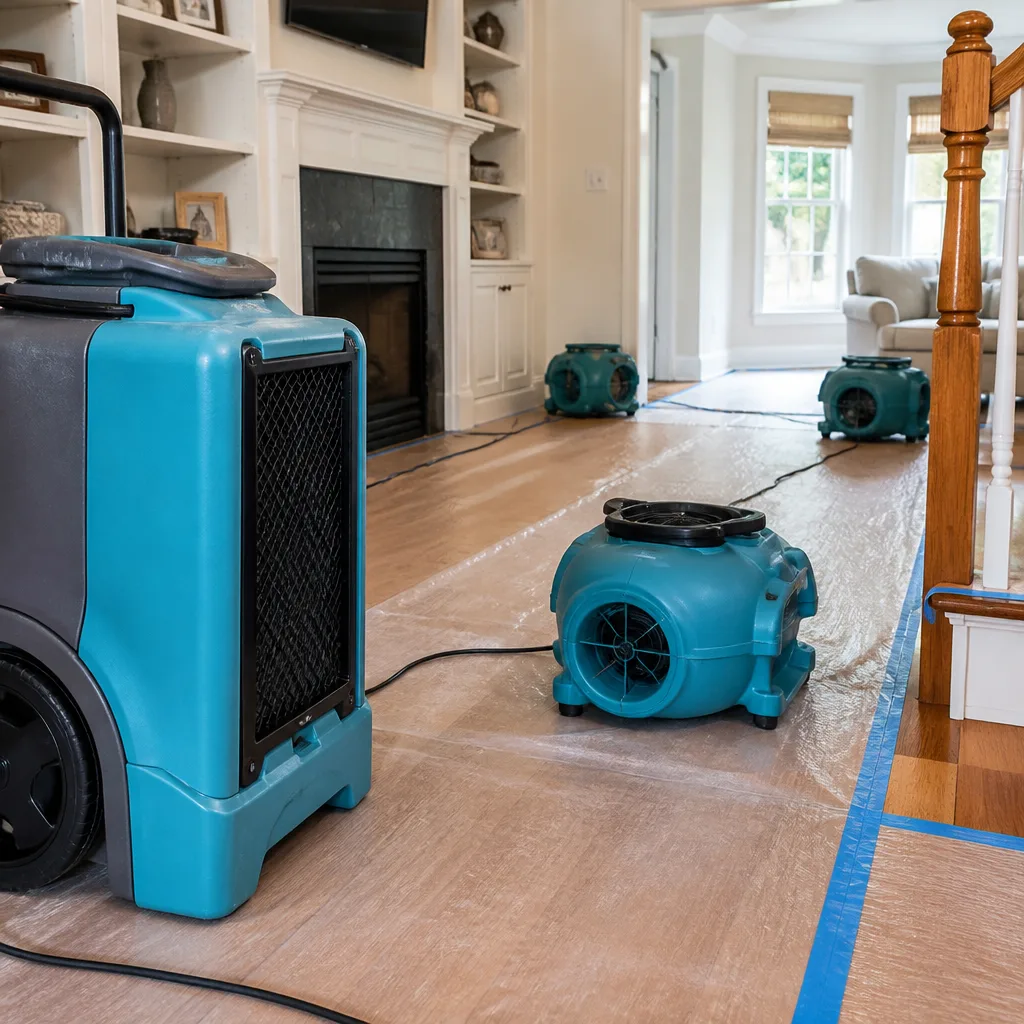
- Extraction. Removing standing water using truck-mounted or portable extraction units. This is charged by the hour or by the square foot of affected area. Equipment matters here: professional-grade extraction from brands like XPOWER moves water noticeably faster than rental-grade units, and faster extraction means less demolition later.
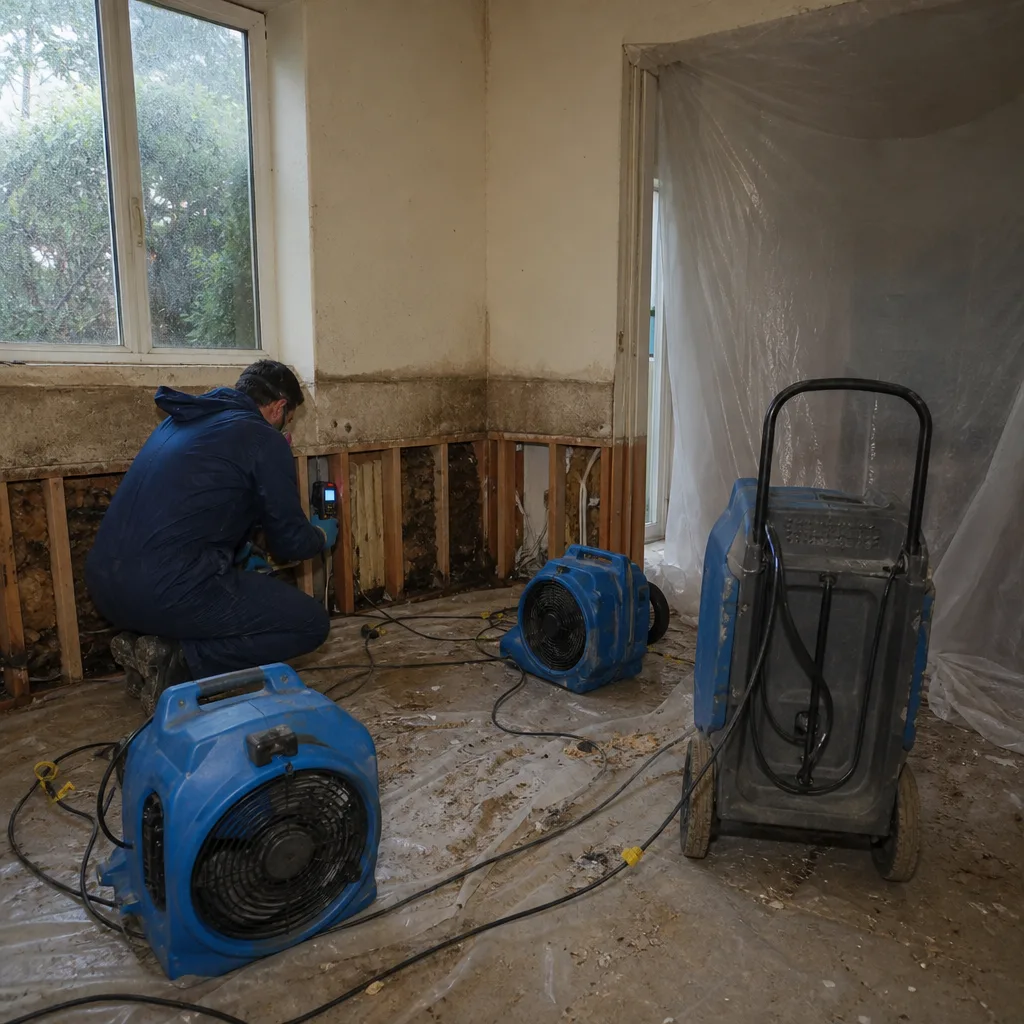
- Structural drying. This is the day-rate line item. Air movers, dehumidifiers, and desiccant drying equipment run per unit per day. A standard affected room might require three to five air movers and one dehumidifier for three to five days. This is also where psychrometrics comes in: the measurement of moisture in air and materials. A technician tracking psychrometric readings daily is documenting that your structure is actually dry before repairs begin, which is what insurance adjusters look for.
- Demolition. Removing drywall, baseboards, flooring, and insulation that cannot be dried. Charged by the square foot or linear foot. The scope of demolition directly affects reconstruction cost.
- Remediation. Treatment for mold, bacteria, or odor. This includes HEPA air scrubbers, antimicrobial application, and for mold, containment and clearance testing.
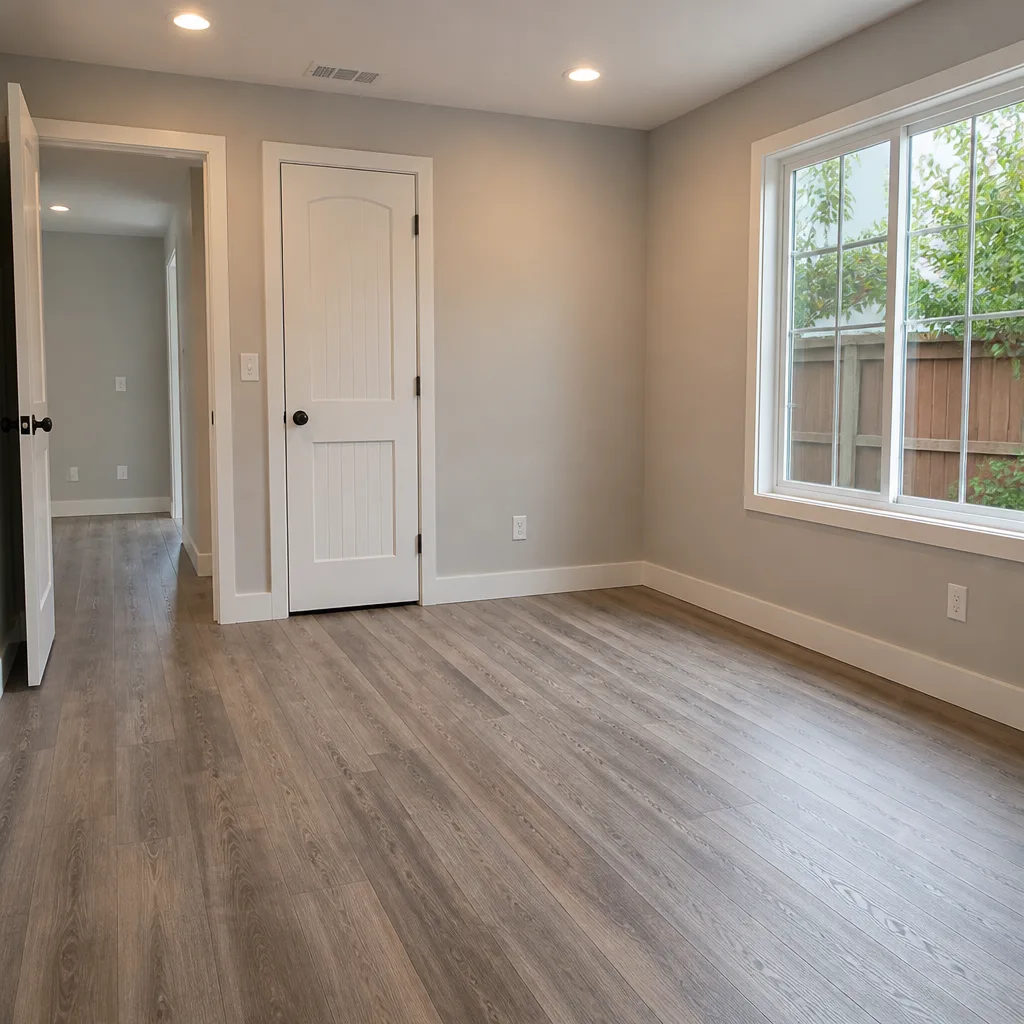
- Reconstruction. Rebuilding what was removed, including drywall installation, painting, flooring, and trim. This is scoped and priced like a remodel, not an emergency call.
In our experience in Thousand Oaks, the quotes that come in thousands of dollars apart-something we detail in Damage Restoration Warning Signs: A Thousand Oaks Homeowner’s Reference Guide-are rarely different in what work gets done. They’re different in what’s documented. A contractor who writes “structural drying, 5 days” without equipment counts, daily moisture readings, or psychrometric logs is giving your insurance company reasons to question the claim.
Water Damage Restoration Costs in Thousand Oaks: 2026 Ranges
Water mitigation in Thousand Oaks, meaning emergency response, extraction, drying, and demolition only, without reconstruction, runs $3.50 to $7.50 per affected square foot. A 400-square-foot water event in a Conejo Valley living room typically lands between $1,400 and $3,000. If the water came from a supply line break that ran while you were at work, expect the higher end: water had hours to saturate materials, and saturated drywall cannot be dried, only removed.
Reconstruction adds $15 to $30 per square foot on top of mitigation. That includes drywall replacement, texture matching, primer, paint, and baseboard. Thousand Oaks homes built in the 1960s and 1970s, common in neighborhoods like Newbury Park and the older sections of Thousand Oaks proper, often have plaster walls rather than drywall. Plaster repair costs more, roughly $8 to $12 per square foot for patching and refinishing, and fewer crews in the area work with it competently. Ask directly whether your quote assumes drywall or plaster if your home pre-dates 1980.
What about the hidden water events? An HVAC condensate leak in a Thousand Oaks attic, common during Ventura County’s dry heat waves when AC systems run continuously, can spread moisture across ceiling joists before anyone notices. A slow leak behind a bathroom vanity might need only $800 worth of extraction and drying if caught early. The same leak left for three weeks becomes a $4,500 mold and demolition job. The math favors early intervention almost every time.
Here’s a working breakdown for a typical 250-square-foot water damage event in a Thousand Oaks home:
- Emergency response and assessment: $200 to $350
- Extraction, 2 to 3 hours with XPOWER professional equipment: $300 to $500
- Structural drying, 4 days with 3 air movers and 1 dehumidifier: $400 to $800
- Demolition of wet drywall, baseboard, and carpet pad: $600 to $1,200
- Reconstruction, including drywall, texture, paint, baseboard: $3,750 to $7,500
- Total range: $5,250 to $10,350
For a deeper look at the mitigation side of water events, see our guide to Water Damage Restoration in Thousand Oaks.
Mold Remediation Costs: Containment, Clearance, and What They Actually Cover
Mold remediation in Thousand Oaks typically runs $1,500 to $6,000 for contained areas up to a few hundred square feet. The cost is driven by three factors: the size of the affected area, whether containment is required, and whether clearance testing is included or billed separately.
Containment matters more than most homeowners realize. Proper remediation uses negative air pressure, meaning a HEPA air scrubber runs continuously inside a contained area, exhausting filtered air outside while preventing mold spores from migrating to unaffected rooms during demolition. A job without containment is not remediation; it’s cleaning. If a quote is suspiciously low, ask whether it includes physical containment and air scrubbing. If the answer is no, you’re not comparing equivalent work.
Clearance testing is the post-remediation verification that spore counts inside the contained area have returned to levels consistent with the surrounding home or outdoors. In Thousand Oaks, environmental testing runs $300 to $600 and is typically performed by a third-party hygienist, not the remediation company. This separation of interests is intentional: the crew that did the work should not be the one verifying the work. A remediation company that offers to run its own clearance testing is cutting a corner you don’t want cut.
Thousand Oaks has a specific climate pattern that affects mold growth. The coastal influence keeps morning humidity high, especially in the fall, while summer heat drives moisture into wall cavities through AC duct condensation. Homes in the hillside neighborhoods, Westlake Village, and the North Ranch area see more mold activity than flatland homes simply because of morning marine layer contact and drainage patterns. If you’re in a hillside home, an annual check of crawlspace and attic ventilation is cheap insurance.
Our Mold Remediation in Thousand Oaks page covers the full remediation process, including what to expect from containment setup and breakdown.
Fire and Smoke Restoration: Pricing by Surface Category
Fire restoration is priced differently from water and mold because the scope is defined by what surfaces smoke touched, not by square footage alone. In Thousand Oaks, a kitchen grease fire that stays contained might cost $4,000 to $12,000 for surface cleaning, odor treatment, and repainting. A whole-house smoke event from a chimney malfunction or electrical fire can run $20,000 to $35,000 or more, especially when structural materials absorbed smoke.
Contractors and insurance adjusters both break fire restoration into surface categories:
- Hard surfaces (counters, tile, sealed wood floors): Cleaned with chemical sponge and HEPA vacuum. $1.50 to $3 per square foot.
- Soft surfaces (upholstery, curtains, carpet): Either cleaned or replaced depending on heat exposure and smoke saturation. $2 to $6 per square foot to clean; replacement is priced at market cost for materials.
- Porous structural materials (drywall, insulation, subfloor): Sealed with odor-blocking primer or removed entirely. Drywall sealing runs $1 to $2 per square foot; replacement runs $3 to $6 per square foot installed.
- HVAC and ductwork: Smoke moves through ducts and deposits soot wherever air travels. Duct cleaning runs $400 to $1,000. Replacing HVAC components due to smoke damage is priced separately and often runs into the thousands.
Thousand Oaks sits in a high fire-risk zone. The 2018 Woolsey Fire and the 2013 Springs Fire both affected parts of the Conejo Valley, and smoke from distant fires regularly reaches Thousand Oaks during Santa Ana wind events. Smoke damage claims in our area are not rare, and Ventura County insurers process them regularly. What they scrutinize is the documentation: photos of soot on surfaces, inventory of affected contents, and a written scope of loss that ties each cleaning category to a specific surface. If you’re dealing with the aftermath of a fire in the area, our Fire Damage Restoration in Thousand Oaks page walks through the restoration timeline.
Hidden Cost Drivers: What Legitimate Contractors Disclose and Price-Movers Inflate
The difference between a $5,000 water job and a $9,000 water job on the same scope often comes down to three line items: HEPA air scrubber day rates, dumpster and haul fees, and re-inspection charges. These are the levers that price-movers pull to inflate final invoices, and legitimate contractors should present them in writing before work starts.
HEPA air scrubber day rates
Air scrubbers run $75 to $150 per day per unit on most restoration invoices. On a five-day water job, two scrubbers at $125 per day adds $1,250 to the bill. That’s legitimate when the job has visible mold or the water is category 3 (sewage). It’s price inflation when the job is clean water on a contained area and the scrubbers run “just to be safe” without documentation of why they’re needed. Ask whether your quote lists scrubber day rates and what standard justifies them. The IICRC S500 standard for water damage restoration defines when air scrubbing is required. A contractor who can’t reference that standard is guessing.
Dumpster and haul fees
Demolition produces debris, and debris has to leave your property. Expect $300 to $800 for a dumpster on a typical water or mold job, more for fire jobs with structural debris. Some contractors don’t include haul fees in the original quote and add them as a line item on the final invoice. Others include them but quote a small dumpster that fills up, then charge an overage for a second haul. The written quote should state dumpster size, haul count, and whether overages are capped.
Re-inspection charges
If drying takes longer than estimated, the contractor needs to return and reassess. Some charge $150 to $300 per re-inspection visit. Others include re-inspections in the original scope. In our experience, a drying job that runs over estimate is the contractor’s planning problem, not the homeowner’s cost to absorb. Ask whether re-inspections are included or billed hourly. The answer tells you a lot about how the contractor thinks about responsibility.
There’s a fourth category that’s less a cost driver and more a quality indicator: equipment quality. Restoration-grade dryers and dehumidifiers from manufacturers like B-Air and Dri-Eaz move more air and pull more moisture per day than consumer units. A contractor using consumer-grade equipment may need more days to hit the same drying target, and every additional day adds day-rate charges. Professional equipment costs more per day but finishes faster, and the math usually favors the pro gear.
Insurance Pricing vs. Retail Quotes: What Your Ventura County Policy Actually Pays
Insurance restoration pricing works differently from retail pricing, and understanding the gap between them-along with Damage Restoration Permits, Codes & Inspections in CA: What You Need to Know-is the key to knowing your out-of-pocket exposure before work starts. Insurance pricing runs through estimating software, most commonly Xactimate, which assigns standard unit costs to every line item: per square foot of drywall removal, per day of air mover rental, per linear foot of baseboard replacement. Those unit costs are based on regional labor and material rates, including Ventura County zip codes.
Here’s what that means for you. If Xactimate prices the structural drying portion of your water claim at $2,200, your insurer approves $2,200 for drying. A contractor who can complete drying for $1,800 has a $400 margin. A contractor who cannot complete drying for less than $2,800 needs either a supplement (a documented request for additional funds) or a cut corner somewhere. Supplements are a normal part of restoration work, and a contractor experienced with insurance claims submits them with documentation that justifies the overage. What you don’t want is a contractor who skips the supplement and cuts the corner instead.
Retail quotes, meaning what you’d pay if a contractor walked your house without insurance involvement, tend to run 10 to 30 percent higher than Xactimate pricing for the same scope. That’s not gouging; it reflects the overhead of running a restoration company without the procedural efficiency of insurance work. If you’re paying out of pocket, you can still get a written guaranteed price, and you should expect it to be itemized the same way an insurance estimate would be. The discipline of itemization protects you whether or not an insurer is involved.
What about your deductible? Standard Ventura County homeowners policies carry deductibles of $1,000 to $2,500, and some carry percentage deductibles of 1 to 5 percent of the dwelling coverage, especially for fire and water claims on older homes. If your deductible is $2,500 and your water mitigation costs $3,500, you’re paying $2,500 and the insurer pays $1,000. Many homeowners in Thousand Oaks choose not to file claims below the $4,000 to $5,000 threshold because the claim history raises premiums more than the payout justifies. That’s a real calculation to make with your agent before you call anyone.
One more thing about insurance: photo documentation is the difference between a smooth claim and a contested one. Every job should be photographed at arrival, before demolition, after extraction, during drying with ongoing moisture readings, and at completion. Those photos, organized and timestamped, are what adjusters reference when reviewing your claim. A contractor who documents every day creates a paper trail that the insurer cannot reasonably dispute. A contractor who doesn’t creates a he-said-she-said situation where you’re the one who loses.
Written Guaranteed Price vs. ‘Not to Exceed’ Estimates: Why the Distinction Matters
A written guaranteed price means the number on the quote is the number on the final invoice, full stop. The contractor absorbs any overages: extra drying days, additional demolition, unexpected material costs. A “not to exceed” estimate means the contractor has set an upper boundary but can bill for less, and more importantly, can bill up to the boundary even if the work didn’t require it. The difference matters most when scope creep appears, and scope creep appears on most restoration jobs as hidden damage reveals itself during demolition.
Here’s the practical distinction. Say a water job starts with a quote of $6,000. Demo reveals that water ran under the tile floor and saturated the subfloor. A contractor working under a written guaranteed price either absorbs the cost of subfloor drying or presents a written change order for your approval before extending the scope. A contractor working under a “not to exceed” estimate simply bills $6,000, even if the actual work performed was only $4,800 worth of labor and materials. The ceiling becomes the price.
The Garrison Standard, which governs every job at Keegan Restoration Thousand Oaks home, exists to eliminate exactly this ambiguity. The price is put in writing before any work begins. It does not move at the door. Change orders, when they’re necessary, are written, priced, and approved by you before additional work starts. That’s the discipline of a written price, and it’s the difference between a quote you can trust and a quote you have to audit.
If you’re comparing quotes, here’s the simplest test: ask each contractor to put the final price in writing and state whether it’s guaranteed or not-to-exceed. A contractor who hesitates, or explains that “we can’t know until we open it up,” or says “we’ll keep you posted” is telling you how they handle surprise costs. You want the one who says “here’s the number, here’s what happens if the scope changes.”
Common Mistakes to Avoid
- Accepting a quote that doesn’t itemize the six standard categories. If emergency response, extraction, drying, demolition, remediation, and reconstruction aren’t each listed with a dollar amount, you can’t compare the quote to anything else. You’re buying a number, not a scope.
- Choosing the lowest bid without comparing documentation practices. The $4,200 quote missing structural drying documentation is not cheaper than the $9,800 quote that includes it. It’s more expensive if your insurer denies the claim. Ask what documentation each contractor provides before comparing prices.
- Not asking whether re-inspections are included. Re-inspection fees are a backdoor cost that can add $300 to $600 to a drying job. The time to ask is when the quote is in front of you, not when the invoice arrives.
- Skipping containment on mold jobs to save money. Remediation without containment spreads spores to unaffected rooms, and the resulting cross-contamination claim can double the original scope. This is the most expensive short-term savings in the trade.
- Filing an insurance claim for every water event. In Thousand Oaks, a $3,000 water job with a $2,500 deductible and a future premium increase may be cheaper to pay out of pocket. Discuss thresholds with your agent before assuming insurance is the cheaper path.
- Not photographing the damage before cleanup begins. Once extraction and demolition start, evidence changes. Photos taken before any work begins are what your adjuster uses to verify the claim. A contractor who documents every stage is protecting your claim; one who doesn’t is exposing it.
- Assuming all restoration equipment is equivalent. A consumer-grade dehumidifier from a hardware store does not perform like a B-Air or Dri-Eaz unit run by a technician who understands psychrometrics. Equipment quality affects drying time, and drying time is billed by the day. Cheaper equipment can cost more in the long run.
When to Call a Professional
Call a professional when water has been standing longer than 24 hours, when you see visible mold growth of any size, when smoke has touched porous surfaces like drywall or upholstery, or when the water source is sewage or a supply line break. These are not situations where waiting yields useful information; they’re situations where time actively works against you. A water event that’s still spreading at hour 36 is a different job than the same event at hour 8, and the cost difference is measured in thousands, not hundreds. Keegan Restoration Thousand Oaks offers free estimates in Thousand Oaks – call (805) 309-3324 and a live person answers, day or night.
Frequently Asked Questions
Water mitigation without reconstruction runs $3.50 to $7.50 per affected square foot in Thousand Oaks, while full restoration including reconstruction runs $15 to $30 per square foot. A typical 250-square-foot water event totals $5,250 to $10,350 when reconstruction is included. Call (805) 309-3324 for an exact written quote on your specific scope.
Standard Ventura County homeowners policies cover sudden and accidental water damage, including burst pipes and supply line failures, but not gradual leaks or maintenance-related issues that developed over time. Your deductible applies first, and claims below $4,000 to $5,000 may not be worth filing given the premium impact. Document everything with photos before any work begins, and ask your contractor whether their documentation is formatted for insurance claims.
In Thousand Oaks, a restoration crew can typically arrive within a few hours of your call, and same-day emergency response is standard for active water events. The faster extraction starts, the less demolition is required, which directly reduces your total cost. A live person answers the phone at Keegan Restoration Thousand Oaks 24 hours a day, including weekends and holidays.
Mold remediation includes containment, negative air pressure, HEPA air scrubbing, and clearance testing. Mold cleaning means wiping visible mold off surfaces, which addresses the symptom but not the spore load in the air and adjacent materials. If a quote doesn’t include containment and clearance, it’s cleaning, not remediation, regardless of what it’s called. Call (805) 309-3324 for an assessment that distinguishes between the two before you spend money on the wrong approach.
The gap is almost always in documentation, equipment, and scope definition, not in the actual work performed. The lower quote may omit structural drying documentation, use consumer-grade equipment that extends drying time, or exclude re-inspections and haul fees that appear on the final invoice. Ask each contractor to itemize their quote against the six standard categories and state whether their price is guaranteed or not-to-exceed. The answers will reveal where the gap comes from.
If visible mold covers an area larger than 10 square feet, if the water source was sewage, or if anyone in the household has respiratory conditions, full remediation with containment and clearance testing is the correct scope. Cleaning alone leaves spores in wall cavities and air ducts that will regrow in Thousand Oaks’s humid fall and winter months. Call (805) 309-3324 and describe what you’re seeing; you’ll get a straight answer on whether remediation is actually warranted.
The Bottom Line
Restoration pricing in Thousand Oaks varies by thousands of dollars for identical scopes because contractors don’t price against a standard. They price against their own willingness to document, equip, and stand behind the work. The homeowners who pay the right amount, not the lowest amount or the highest, are the ones who ask for itemized quotes across the six standard categories, verify that documentation is insurance-grade, and demand a written guaranteed price before anything gets touched. That’s not a trick. It’s just how the work should be priced, and now you know how to ask for it. For more guides & resources on protecting your Thousand Oaks home, explore our blog.
Written by Shane Pruitt, Owner at Keegan Restoration Thousand Oaks, serving Thousand Oaks since 2005.
See the difference
 Before
 After
After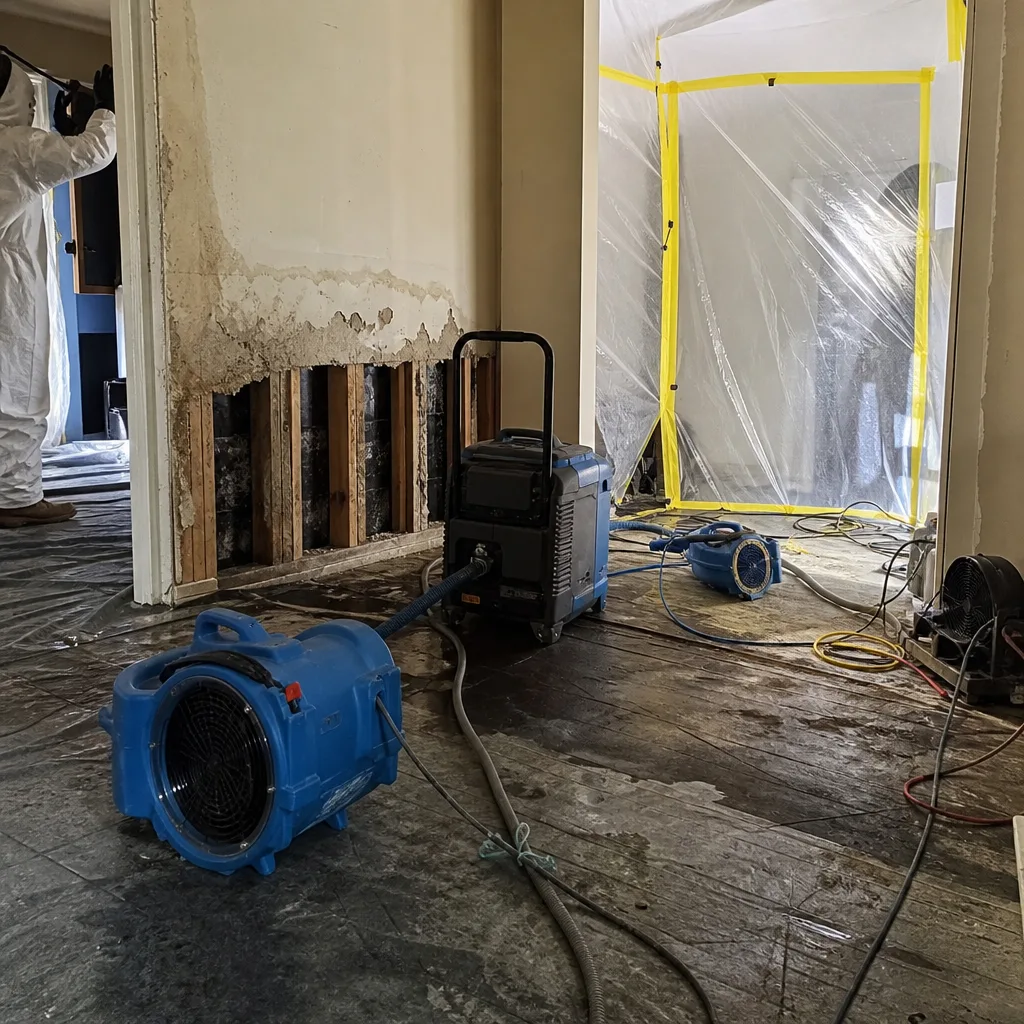 Before
 After
After Before
 After
After